The Feud That a Funeral Home Accidentally Ended
Photo: Steve Shook from Moscow, Idaho, USA, CC BY 2.0, via Wikimedia Commons
Family feuds are easy to start and nearly impossible to finish. Grievances calcify. Stories get retold until they harden into mythology. By the time a feud has lasted a generation, the original cause is often buried so deep under accumulated resentment that nobody can quite remember what started it — only that the other family is, categorically, the problem.
The Harmon and Delafield families of rural Indiana had been doing this for years by 1961. The specifics of their original falling-out have been described differently by different descendants, but the broad strokes are consistent: a property dispute sometime in the late 1940s, a handshake agreement that one side felt the other violated, and a slow hardening of positions until the two families — who lived less than four miles apart — had achieved a state of cold, practiced avoidance.
 Photo: rural Indiana, via thumbs.dreamstime.com
Then, in the spring of 1961, both family patriarchs died within ten days of each other. And a small-town funeral home made a mistake that would, entirely by accident, fix everything.
The Mix-Up
The funeral home, a family-run operation that served the county's rural communities, was handling both services simultaneously during an unusually busy stretch. The two men — Earl Harmon, 71, and Robert Delafield, 68 — were of similar build, had died of similar causes (both cardiac events), and were processed through the funeral home within the same 72-hour window.
The exact mechanism of the mix-up has never been fully reconstructed, and the funeral home closed in the early 1980s, taking most of its records with it. What the families pieced together later, through conversations with former employees and partial documentation, was that the two men's remains were transposed at some point during preparation — most likely during a labeling error when both were moved between preparation rooms.
Each family buried the other's patriarch.
Neither knew.
The Graveside Miracle Nobody Planned
Here's where the story pivots from sad to strange.
Both funerals were held at the same small Methodist church — the only one for miles — on the same Saturday morning, one service following the other. The families had not spoken in years, but geography and community obligation put them in the same parking lot, the same fellowship hall, the same narrow hallway outside the same sanctuary.
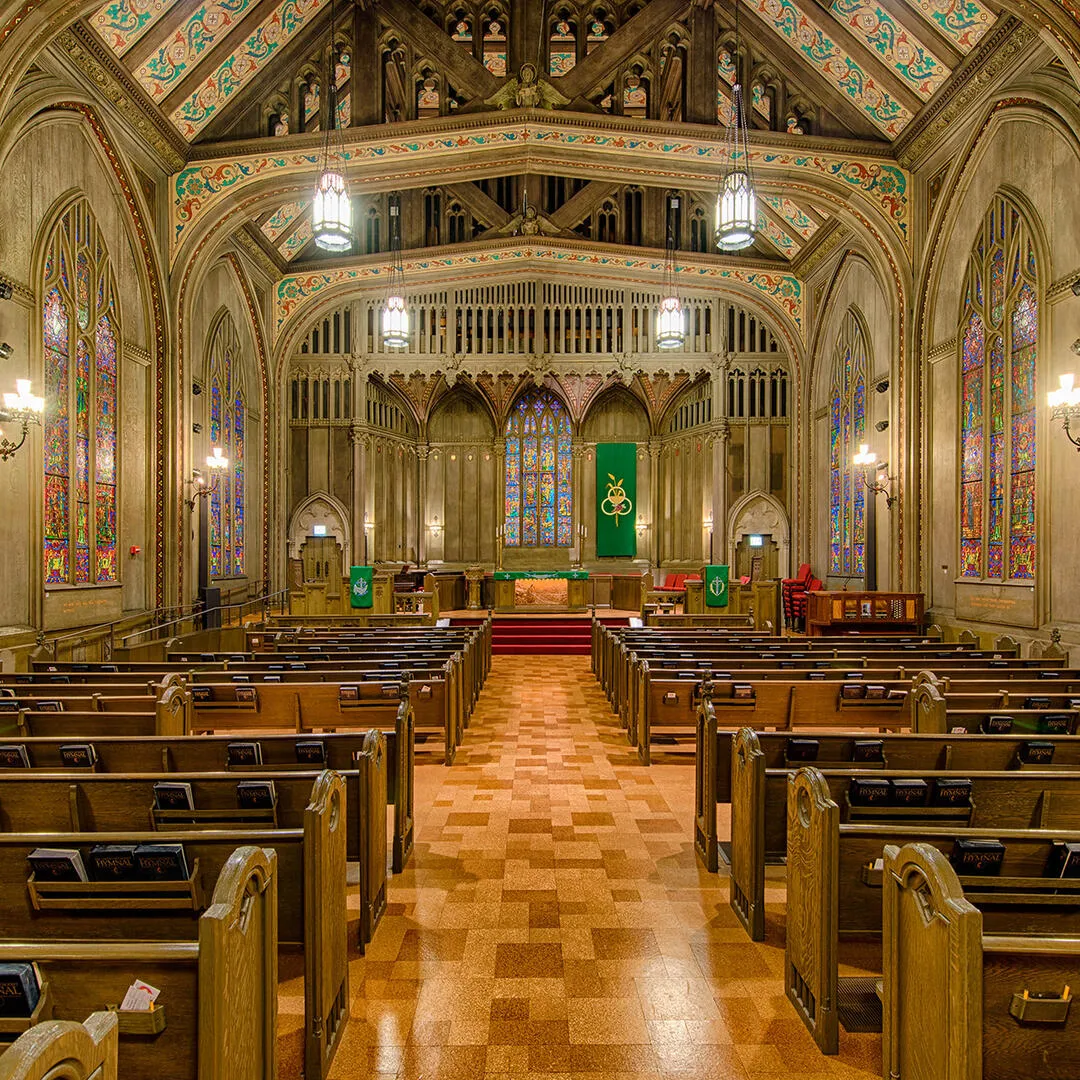 Photo: Methodist church, via ghosty-production.s3.amazonaws.com
And something shifted.
According to multiple family members interviewed in later years, the sight of both families grieving on the same day, in the same place, seemed to shake something loose. Earl Harmon's widow, by multiple accounts, was the one who crossed the invisible line first — she approached Robert Delafield's widow after the second service and said something to the effect of: "I'm sorry for your loss. He was a good man to his family, whatever else."
It wasn't forgiveness, exactly. But it was an opening.
Over the following months, the two families began a tentative, cautious re-engagement. Shared history helped. Shared grief helped more. Within a few years, what had been a frozen feud had thawed into something approaching neighborly normalcy. By the mid-1960s, the families were attending the same community events without incident. By the 1970s, there were friendships across the family lines. By the 1980s, a Harmon grandson and a Delafield granddaughter were married.
The reconciliation, by any measure, was genuine. And it was built, unknowingly, on a foundation of switched remains.
The DNA Test That Changed Everything
In the early 1990s, consumer genealogy tools were becoming widely available, and family history had become something of a national hobby. In 1994, a Harmon family member submitted a DNA sample as part of a genealogy project tracing the family's ancestry. Standard stuff — except when the results came back, they included a mitochondrial ancestry flag that didn't match the family's known lineage on the paternal side.
It took another two years of careful comparison, consultation with a genetic genealogist, and eventually a discreet exhumation to confirm what the data was suggesting: the man buried in the Harmon family plot was not Earl Harmon.
He was Robert Delafield.
The Delafield family was contacted. Their own records were reviewed. A second exhumation confirmed the mirror image of the same situation.
The families had spent 33 years tending each other's graves.
What Do You Do With That?
The discovery, understandably, was complicated. There was grief — a re-opening of losses that had been processed and put to rest long ago. There were legal questions about the exhumations and reinterments. There were conversations that were difficult to have.
But there was also, by most accounts, something close to wonder.
The families chose to re-inter both men in their correct plots quietly, without public ceremony. But they also chose — and this is the part that earns this story its place in the genuinely unbelievable — to leave a small marker at each original grave acknowledging the mix-up and the unexpected role it had played in their shared history.
"He wasn't our grandfather," one Harmon family member said in a local newspaper interview at the time. "But in a weird way, he kind of was. He's the reason we know these people. He's the reason we're family with them now."
No mediator engineered that outcome. No community leader brokered that peace. A clerical error in a funeral home on a busy spring week in 1961 did what thirty years of intentional effort hadn't managed.
Sometimes the universe fixes things sideways.