The Shipwrecked Teenager Who Accidentally Opened Japan to the World
The Fishing Trip That Changed Two Nations
In 1841, if you'd told anyone that a teenage fisherman from Cape Cod would one day help broker the treaties that opened Japan to the Western world, they'd have suggested you lay off the rum. Yet that's exactly what happened to John Manjiro, whose accidental journey from shipwrecked kid to international diplomat reads like the most implausible historical fiction ever written.
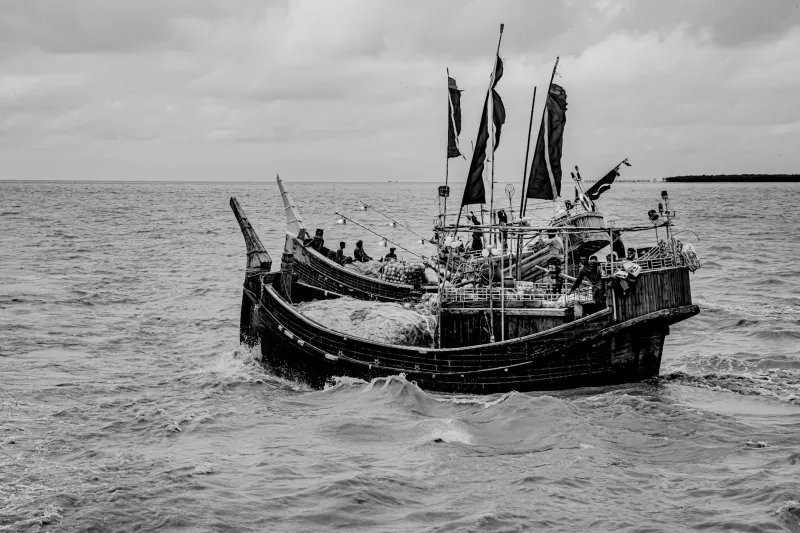
Manjiro started his unlikely adventure doing what thousands of New England teenagers did: fishing. At 14, he joined four other fishermen on a routine trip off the Japanese coast. What should have been a mundane voyage for bonito became one of history's most consequential shipwrecks.
Stranded on the World's Most Inconvenient Island
When their boat was destroyed in a storm, Manjiro and his companions washed up on Torishima, a barren volcanic rock about 300 miles south of Tokyo. The island had exactly three things going for it: it existed, it was above water, and it wasn't actively erupting. Everything else — food, fresh water, shelter, hope — was in critically short supply.
For five months, the five Japanese castaways survived on bird eggs, rainwater, and whatever fish they could catch with improvised tools. They had no way to signal for help and no realistic prospect of rescue. Torishima wasn't on any major shipping route, and even if it were, most ships wouldn't have bothered stopping for a handful of stranded fishermen.
The Most Fortunate Rescue in History
Then, in what might be the luckiest maritime encounter ever recorded, the American whaling ship John Howland spotted their signal fire. Captain William Whitfield not only rescued the castaways but made a decision that would reshape international relations: instead of simply dropping them off at the nearest port, he offered to take young Manjiro back to America.
This wasn't standard operating procedure. Most rescued sailors were deposited at the next convenient harbor. But something about the curious, intelligent teenager impressed Whitfield, who decided to essentially adopt him and bring him to Massachusetts.
From Fairhaven to Harvard (Sort Of)
Manjiro's arrival in Fairhaven, Massachusetts, in 1843 marked the beginning of one of history's most unusual educational experiences. He became the first Japanese person to live in America, attending local schools and learning English with the same determination that had kept him alive on Torishima.
Whitfield paid for Manjiro's education, and the young man proved to be an exceptional student. He studied navigation, surveying, and shipbuilding — skills that would prove invaluable later. He even spent time at a school that would eventually become part of Harvard University, making him arguably the first Japanese person to receive an American higher education.
The Impossible Return Journey
By 1850, Manjiro faced a problem that would stump most career counselors: he wanted to go home to a country that had been completely closed to foreign contact for over 200 years. Japan's sakoku policy meant that any Japanese person who left the country was forbidden from returning, on pain of death.
Most people would have accepted their fate and built a life in America. Manjiro decided to risk execution instead.
Using money he'd earned from California Gold Rush prospecting (because of course he tried that too), Manjiro bought passage on a ship to the Ryukyu Islands, then made his way to mainland Japan. When he finally reached his home village in 1851, he'd been gone for over a decade and presumed dead.
From Criminal to Consultant
Initially, Japanese authorities treated Manjiro exactly as the law required: as a potential traitor who had been contaminated by foreign influence. He was arrested, interrogated, and held under house arrest while officials decided whether to execute him or just keep him locked up forever.
But Manjiro had returned at a crucial moment in Japanese history. American Commodore Matthew Perry was already planning his mission to force Japan to open trade relations with the West. Japanese officials, realizing they needed intelligence about American capabilities and intentions, began to see their returned castaway not as a criminal but as an invaluable resource.
The Secret Advisor
When Perry arrived with his "Black Ships" in 1853, demanding that Japan end its isolation, Manjiro found himself in an impossible position: the only person in Japan who truly understood both cultures. He became an unofficial advisor to the Tokugawa government, helping them navigate negotiations with a country he'd called home for seven years.
Manjiro's insights proved crucial. He could explain American customs, technology, and negotiating styles in ways that helped Japanese diplomats avoid critical misunderstandings. He translated documents, advised on protocol, and served as a cultural interpreter during one of the most delicate diplomatic encounters in history.
The Butterfly Effect in Action
The treaties that emerged from these negotiations — the Convention of Kanagawa in 1854 and subsequent agreements — ended Japan's 220-year isolation and set the stage for the country's rapid modernization. Within decades, Japan transformed from a feudal society into a major industrial power.
None of this might have happened the same way without Manjiro's accidental journey. His presence gave Japanese negotiators confidence and knowledge they wouldn't have had otherwise. A routine fishing trip had created the perfect cultural bridge at exactly the right historical moment.
The Fisherman's Legacy
Manjiro lived to see Japan become a modern nation and America become a Pacific power. He served as an interpreter and cultural advisor for decades, helping smooth relations between the two countries he'd accidentally learned to call home.
His story remains one of history's most remarkable examples of how random events can reshape entire civilizations. A teenage fisherman's bad weather became a diplomatic breakthrough that changed the course of two nations.
Sometimes the most important moments in history start with someone just trying to catch dinner and ending up catching the future instead.