When Petty Politics Banned Progress: The Kansas Town That Outlawed Its Own Future
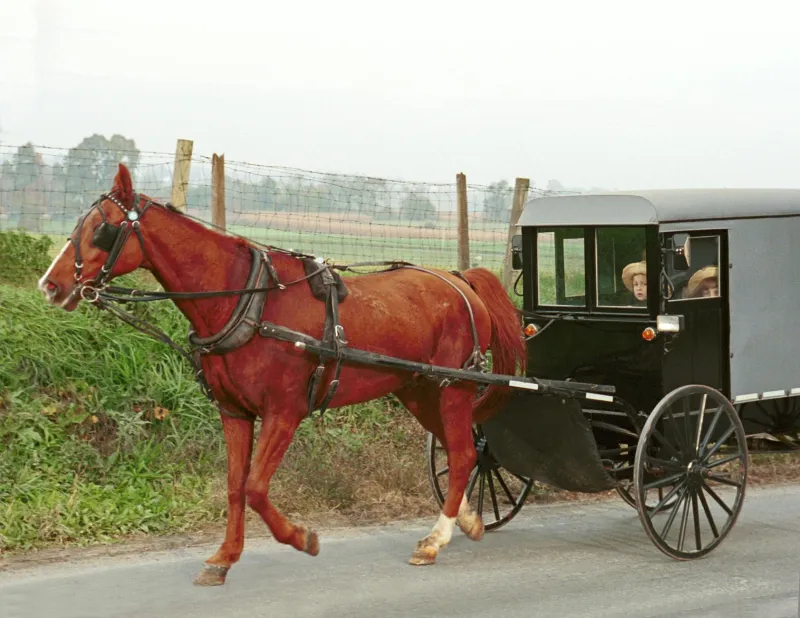
When Petty Politics Banned Progress: The Kansas Town That Outlawed Its Own Future
Imagine living in a place where flipping a light switch could technically get you arrested. Where driving a car down Main Street violated city ordinance. Where installing indoor plumbing made you a lawbreaker in your own hometown.
This wasn't some dystopian novel or far-off dictatorship. This was Fredonia, Kansas, in the early 1900s — a small prairie town that accidentally outlawed the 20th century because two grown men couldn't stop fighting.
The Feud That Stopped Time
It all started with what should have been a routine town council meeting in 1903. On one side sat Cornelius "Corny" Whitman, a stubborn hardware store owner who'd been on the council for eight years. On the other: newcomer Theodore "Teddy" Blackstone, a progressive businessman who'd recently moved from Kansas City with big ideas about modernizing their sleepy agricultural community.
The spark that lit this particular powder keg? A disagreement over whether the town should install electric streetlights.
Blackstone pushed hard for the lights, arguing they'd make Fredonia more attractive to new businesses and residents. Whitman, suspicious of anything that hadn't existed when his grandfather founded the town, fought back with equal fervor. What started as a policy disagreement quickly devolved into personal attacks, public shouting matches, and a rivalry that would define Fredonia's fate for the next three decades.
The Weaponization of Local Government
Rather than duke it out like gentlemen, Whitman and Blackstone chose to wage their war through the most boring weapon imaginable: municipal ordinances.
Whitman struck first. In late 1903, he proposed Ordinance 47-B, ostensibly a "public safety measure" that banned "the installation of overhead electrical wiring" within city limits. His reasoning? Fire hazard. The real target? Blackstone's streetlight proposal.
Blackstone countered with his own ordinance restricting "excessive noise from mechanical devices" — a thinly veiled attack on Whitman's new steam-powered grain mill.
And so began the most ridiculous legislative arms race in American history.
The Escalation Gets Absurd
By 1905, the two men had turned Fredonia's law books into a maze of increasingly specific and contradictory regulations. Whitman banned "self-propelled vehicles exceeding the speed of a walking horse" — effectively outlawing automobiles. Blackstone retaliated by prohibiting "the sale of goods manufactured prior to 1850" — targeting Whitman's antique furniture side business.
The other three council members, apparently too exhausted or entertained to intervene, simply voted along party lines. The town's residents watched in bewilderment as their local government systematically outlawed modernity.
By 1910, Fredonia's ordinance book contained:
- A ban on electric lighting (Ordinance 47-B)
- Prohibition of automobiles within city limits (Ordinance 52-A)
- Restrictions on "mechanical water pumping devices" (Ordinance 61-C)
- A requirement that all buildings maintain "traditional architectural character" — which somehow meant no indoor plumbing (Ordinance 73-D)
- Mandatory use of "natural illumination methods" after sunset (Ordinance 81-F)
Living in Legal Limbo
The truly bizarre part? Life went on.
Fredonia's residents, faced with laws that made normal living technically illegal, developed an elaborate system of workarounds that would make any tax attorney proud.
When automobiles became common, residents would park their cars just outside city limits and walk the final few blocks home. Enterprising locals set up a "car storage" business that was really just a parking lot with a tent.
For electricity, creative homeowners ran extension cords from neighboring farms outside the city boundary. The local newspaper operated from a farmhouse two miles away but delivered papers by horse-drawn cart to maintain the illusion of compliance.
Indoor plumbing presented the biggest challenge. Technically, you couldn't install modern plumbing, but nobody said anything about "temporary water delivery systems." Residents installed elaborate networks of removable pipes and "portable" fixtures that could theoretically be disconnected at a moment's notice.
The End of an Era
The madness finally ended in 1934 when both Whitman and Blackstone died within six months of each other — Whitman of natural causes, Blackstone in a car accident just outside city limits (he'd been driving to his illegally parked automobile).
The new city council, led by people who'd grown up watching this absurd theater, immediately began repealing the accumulated nonsense. It took them three years to sort through all the contradictory ordinances and figure out what was actually legal in Fredonia.
The Legacy of Spite
Today, Fredonia looks like any other small Kansas town, complete with electric lights, paved streets, and indoor plumbing. But dig into the city archives, and you'll find one of the most comprehensive collections of anti-progress legislation ever assembled by a democratically elected government.
The Fredonia story serves as a perfect reminder that local politics, no matter how small-scale, can have real consequences for real people. Sometimes the most powerful force shaping a community isn't economic pressure or natural disaster — it's just two stubborn men who refuse to admit the other guy might have a point.
And somewhere in Kansas, there's probably still an ordinance on the books requiring horse-drawn carriages to yield to pedestrians carrying lanterns. Because nobody ever said government was supposed to make sense.