When a Forgotten $7 Bill Turned a Minnesota Town Into an Accidental Nation
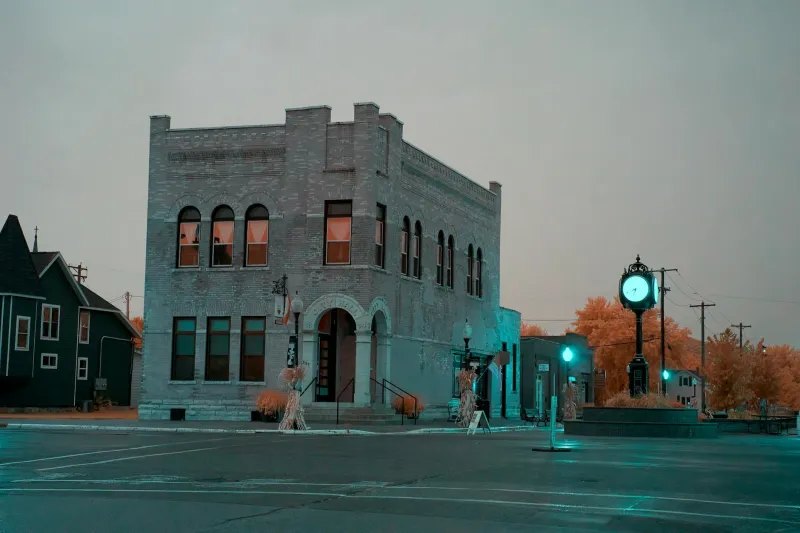
The Day America Lost a Town Over Pocket Change
Imagine discovering that your entire hometown had accidentally ceased to exist because nobody remembered to write a check for seven dollars. That's exactly what happened to the residents of Kinney, Minnesota, in what might be the most bureaucratically absurd sovereignty crisis in American history.
In the spring of 1977, this sleepy farming community of roughly 300 people made a startling discovery: they weren't technically part of the United States anymore. Not because of some dramatic political uprising or territorial dispute, but because someone forgot to pay what amounted to less than the cost of a pizza.
How to Lose a Country in One Easy Payment
The trouble began with Minnesota's municipal incorporation requirements, which demanded annual fees to maintain official township status. These weren't exactly breaking-the-bank expenses – we're talking about the bureaucratic equivalent of renewing your driver's license. But in Kinney's case, the paperwork had somehow slipped through the cracks.
For months, the town had been operating in a strange legal gray area. Their municipal government had no official authority. Their local ordinances carried no legal weight. Technically speaking, Kinney had become an unincorporated patch of land that happened to have roads, buildings, and people who still thought they lived in Minnesota.
When town officials finally discovered the oversight, they faced a choice that would make most bureaucrats break out in a cold sweat: admit the embarrassing mistake and quietly pay the back fees, or lean into the absurdity and see where it led.
They chose door number two.
The Republic of Kinney is Born
With the kind of deadpan humor that only comes from living through a Minnesota winter, local officials decided to embrace their accidental independence. If they weren't part of the United States anymore, why not make it official?
On a warm summer day in 1977, Kinney declared itself the "Republic of Kinney," complete with tongue-in-cheek proclamations about their newfound sovereignty. They issued their own "passports" (really just novelty certificates), appointed a "minister of foreign affairs," and began fielding interview requests from bewildered journalists who couldn't quite believe the story.
The whole affair had the feel of a community theater production, except the stage was real life and the audience was the entire United States government.
When Paperwork Becomes Performance Art
What made Kinney's situation particularly surreal was how seriously the legal technicalities had to be taken, even as everyone involved treated the whole thing as an elaborate joke. The town really had lost its official status. The residents really were living in a bureaucratic no-man's land. And yes, they really could claim – with a straight face and legal backing – that they were no longer Americans.
News outlets across the country picked up the story, turning Kinney into an unlikely symbol of how fragile our administrative systems really are. Here was proof that civilization, at least the paperwork part, runs on the honor system and the assumption that someone, somewhere, is keeping track of the details.
Local resident and unofficial "foreign minister" Ernie Johnson told reporters at the time, "We figured if we're going to be independent, we might as well do it right." The town began issuing mock diplomatic credentials and even considered establishing "foreign relations" with neighboring communities.
The Shortest Independence Movement in History
Of course, the Republic of Kinney wasn't destined to last. After milking the publicity for several weeks and giving everyone involved a good laugh, town officials quietly paid their overdue fees and rejoined the United States. The whole independence movement lasted about as long as a good summer vacation.
But the story didn't end there. Kinney's brief flirtation with sovereignty became local legend, the kind of tale that gets retold at coffee shops and town meetings for decades afterward. It also served as an inadvertent stress test for American bureaucracy, proving that our entire system of local government runs on surprisingly thin margins and the assumption that people will remember to pay their bills.
The Bureaucratic House of Cards
What makes Kinney's story so fascinating isn't just the absurdity of the situation, but what it reveals about how our society actually functions. We like to think of government as this massive, immutable institution, but the truth is that much of it depends on routine paperwork filed by overworked clerks who occasionally forget to mail a check.
The incident highlighted similar cases across America where towns had accidentally lapsed their incorporation status, usually discovering the problem only when they tried to apply for federal grants or update their legal documents. In most cases, these oversights were quietly corrected with back payments and amended filings. Kinney was unusual only in their decision to turn the mistake into a media spectacle.
Legacy of the Seven-Dollar Nation
Today, Kinney remains a properly incorporated Minnesota community, their brief independence movement remembered mainly in local history books and the occasional newspaper retrospective. But their story endures as a perfect example of how the most mundane administrative failures can spiral into the most unexpected consequences.
It's a reminder that beneath all our grand institutions and official ceremonies, much of civilization runs on the equivalent of remembering to pay the electric bill. Sometimes the most important historical moments aren't dramatic revolutions or epic battles – they're the quiet disasters that happen when someone forgets to mail a seven-dollar check.
And in Kinney's case, that forgetfulness gave them the distinction of being America's shortest-lived breakaway republic, founded not on principles of liberty or justice, but on the simple bureaucratic truth that even countries can accidentally fall through the cracks.