The Route That Refused to Die
Frank Kowalski had been delivering mail to Millerville, Oregon for exactly three years when the town disappeared overnight. On August 14, 1936, a catastrophic forest fire swept through the Cascade foothills and erased the lumber community so completely that even the foundations were buried under ash and debris. By morning, all 127 residents had evacuated, and Millerville existed only in memory.
 Photo: Frank Kowalski, via arc-anglerfish-washpost-prod-washpost.s3.amazonaws.com
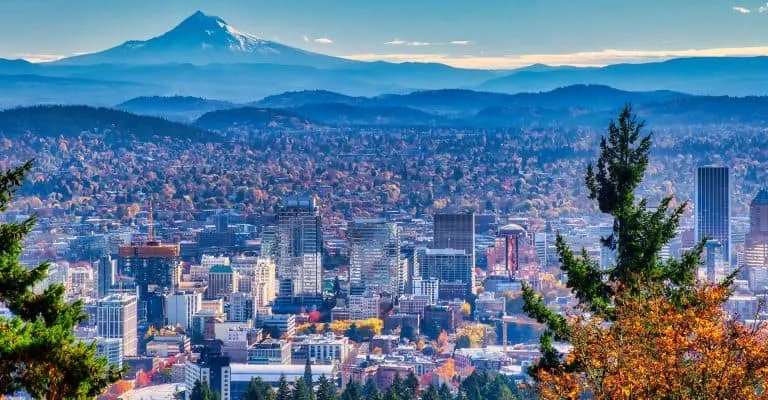 Photo: Millerville, Oregon, via www.visitoregon.com
But nobody told the U.S. Postal Service to stop delivering mail there.
When Bureaucracy Meets Disaster
The fire that destroyed Millerville was one of dozens that scorched Oregon that summer, and emergency response teams were stretched impossibly thin. In the chaos of evacuations, emergency shelters, and damage assessments, filing the proper paperwork to officially discontinue postal service to a burned-out town fell somewhere between "low priority" and "completely forgotten."
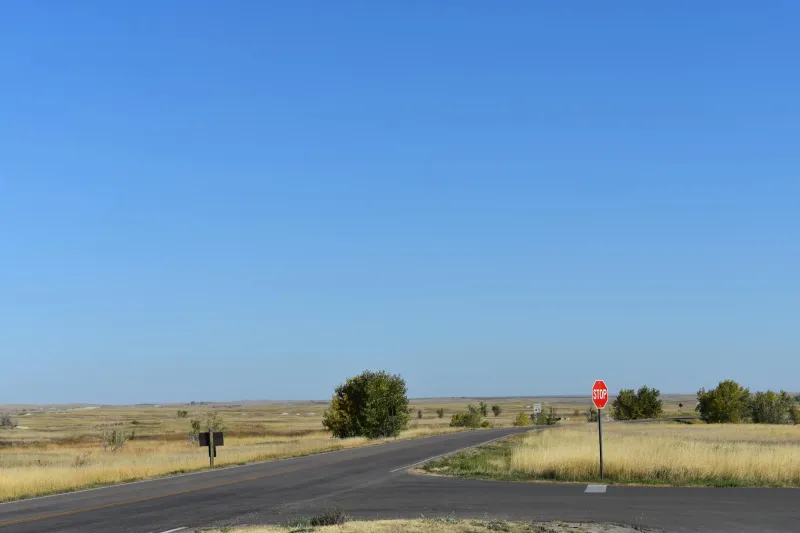
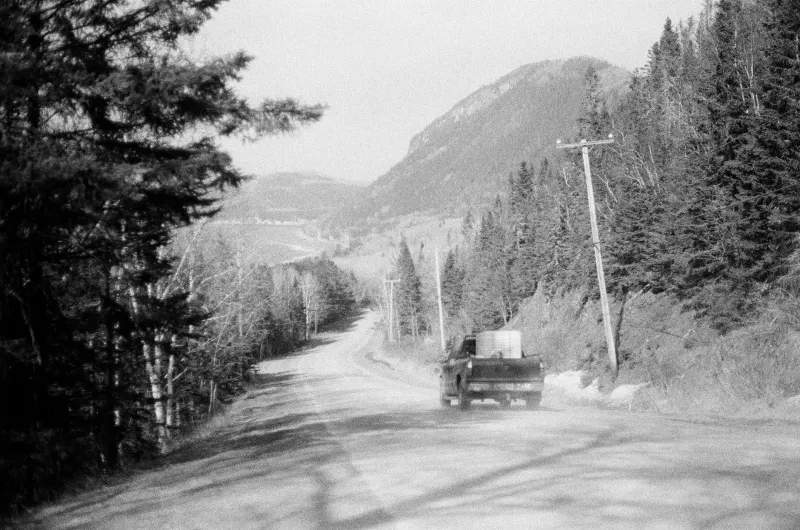
Meanwhile, Frank Kowalski reported to work on August 15th, loaded his mail truck with letters and packages addressed to Millerville residents, and drove his usual route into the mountains. What he found when he arrived was a landscape that looked like the surface of the moon.
The Dedication of Routine
Most postal workers would have turned around, driven back to the regional office, and explained that there was no longer a town to deliver mail to. Frank Kowalski was not most postal workers.
A meticulous man who had never missed a delivery day in his career, Kowalski surveyed the smoking ruins and made a decision that would define the next eleven years of his life: if the Postal Service wanted him to deliver mail to Millerville, he would deliver mail to Millerville. The fact that Millerville no longer existed was not his problem to solve.
He found a partially burned fence post that was still standing near where the general store used to be, tied a mail bag to it, and drove home.
The Routine That Nobody Questioned
For the next several months, Kowalski continued making his Millerville run three times a week, just as he always had. Mail addressed to the town's former residents kept arriving at the regional sorting facility — insurance paperwork, government correspondence, family letters from people who hadn't yet heard about the fire.
Kowalski would load it all into his truck, drive to his designated fence post, and methodically sort the mail into the canvas bag. He never opened any letters or packages, never tried to redirect them to the evacuated residents' new addresses. His job was to deliver mail to Millerville, and that's exactly what he did.
The Growing Mystery
What makes Kowalski's story truly bizarre is that his supervisors knew exactly what he was doing. His weekly route reports clearly stated "Millerville delivery completed" every Tuesday, Thursday, and Saturday. He filed expense reports for the gasoline needed to drive to an empty clearing in the mountains. He even requested a replacement mail bag when the original one finally rotted off the fence post in 1938.
Nobody ever asked him to explain why he was delivering mail to a town that didn't exist. Nobody suggested he might be wasting time and resources. The U.S. Postal Service, an institution famous for its efficiency and attention to detail, somehow lost track of the fact that one of their regular delivery routes led to absolutely nothing.
The Accumulating Evidence
By 1940, Kowalski's fence post mail bag had become a surreal time capsule. Four years of undelivered correspondence had created a soggy, weather-beaten archive of life trying to reach people who were no longer there to receive it.
There were tax bills addressed to businesses that had burned down. Love letters sent to sweethearts who had moved to Portland or Seattle. Government forms requesting information from a town council that had dissolved the day the fire started. Christmas cards, birthday wishes, and condolence notes all piling up in a canvas bag tied to a charred piece of wood.
Kowalski never read any of it. He just kept adding to the collection, three times a week, year after year.
The Discovery That Changed Nothing
In 1943, a regional postal inspector named Margaret Chen was conducting a routine audit of rural delivery routes when she noticed something odd in the expense reports. Route #47-B was consistently showing delivery times and mileage that suggested the mail carrier was driving deep into the mountains to reach a single stop.
Chen decided to follow Kowalski on his Tuesday run to see what was taking so long. When they arrived at the fence post clearing, she asked the obvious question: "Frank, where exactly is the town?"
Kowalski pointed to the mail bag. "Right there. That's Millerville."
Chen filed a report recommending that Route #47-B be discontinued immediately. Her recommendation was forwarded to the regional office, where it was apparently filed in a drawer and forgotten. Kowalski kept making his deliveries.
The Audit That Finally Ended Everything
The Millerville mail route might have continued indefinitely if not for a comprehensive postal service audit conducted in 1947. A team of efficiency experts was reviewing every rural delivery route in Oregon, looking for ways to cut costs and improve service.
When they discovered that the Postal Service had been paying a full-time employee to deliver mail to an empty clearing for over a decade, the reaction was swift and decisive. Route #47-B was officially discontinued on September 30, 1947, and Kowalski was reassigned to suburban delivery routes in Salem.
The Fate of Eleven Years of Mail
What happened to the enormous accumulation of undelivered mail remains one of the most poignant aspects of the story. Postal regulations required that all undeliverable mail be returned to senders or forwarded to the Dead Letter Office in Washington, D.C.
But after eleven years, most of the return addresses were no longer valid. The senders had moved, died, or simply forgotten they had ever tried to contact someone in Millerville. The Dead Letter Office received several large sacks of water-damaged, illegible correspondence that couldn't be processed or returned.
According to postal records, approximately 2,847 pieces of mail were ultimately destroyed as undeliverable. Eleven years of human connection, business correspondence, and bureaucratic communication that had been faithfully collected and carefully preserved by one dedicated postal worker, only to be incinerated in a government furnace.
The Man Who Kept Faith with Ghosts
Frank Kowalski worked for the Postal Service until his retirement in 1963. He never publicly discussed his years of delivering mail to Millerville, and colleagues described him as a quiet, methodical man who took his responsibilities seriously.
When asked by a local newspaper reporter about his unusual route, Kowalski's response was characteristically simple: "They told me to deliver the mail to Millerville. So I delivered the mail to Millerville."
In an age of instant communication and digital efficiency, there's something both absurd and deeply moving about Kowalski's dedication to an impossible task. He spent eleven years faithfully serving a community that existed only in postal records and his own unwavering sense of duty.
Today, the site where Millerville once stood is part of the Willamette National Forest. Hikers occasionally find rusted pieces of machinery or fragments of foundation stones, but there's no historical marker acknowledging the town that was there or the mailman who refused to let it be completely forgotten.
 Photo: Willamette National Forest, via dynamic-media-cdn.tripadvisor.com