The Sandwich Break That Killed 20 Million People
The Day Everything Went Wrong (Until It Went Really Wrong)
June 28, 1914, started as a comedy of errors in Sarajevo. By the end of the day, it had become the most consequential wrong turn in human history.
Archduke Franz Ferdinand of Austria-Hungary was visiting the Bosnian capital for a military inspection—a routine imperial duty that should have been about as exciting as a ribbon-cutting ceremony. Instead, a series of spectacularly bungled assassination attempts, one hungry teenager, and a driver who couldn't read a map accidentally triggered the deadliest war the world had ever seen.
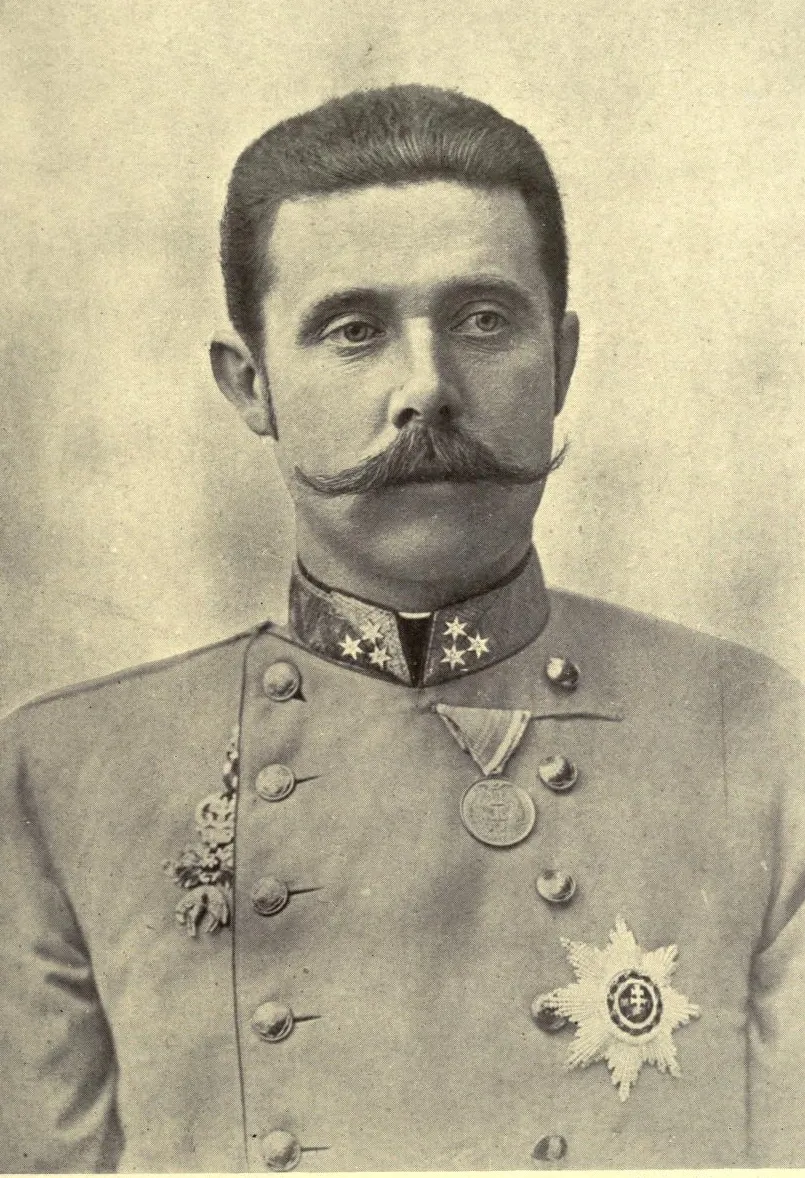 Photo: Archduke Franz Ferdinand of Austria-Hungary, via 66.media.tumblr.com
When Terrorism Meets Amateur Hour
The Black Hand, a Serbian nationalist group, had planned what should have been a foolproof assassination. They stationed six conspirators along the Archduke's parade route, armed with bombs and pistols. Six killers, one target, a predictable route—what could go wrong?
Everything.
The first assassin, Muhamed Mehmedbašić, lost his nerve when he saw a police officer standing nearby and simply... didn't throw his bomb. The second, Nedeljko Čabrinović, actually did throw his bomb at the Archduke's car. It bounced off, rolled under the wrong vehicle, and exploded, injuring several bystanders but leaving Franz Ferdinand completely unharmed.
Čabrinović immediately swallowed a cyanide pill (which was apparently expired and just made him vomit) and jumped into the Miljacka River (which was only four inches deep). He was promptly arrested while standing in a puddle, covered in his own vomit.
The other conspirators, watching this spectacular failure unfold, decided the mission was blown and wandered off.
The Lunch That Changed Everything
One of those discouraged assassins was 19-year-old Gavrilo Princip. After watching his fellow conspirators fail so dramatically, he figured the whole plot was finished and went to grab a sandwich at Schiller's Delicatessen on Franz Joseph Street.
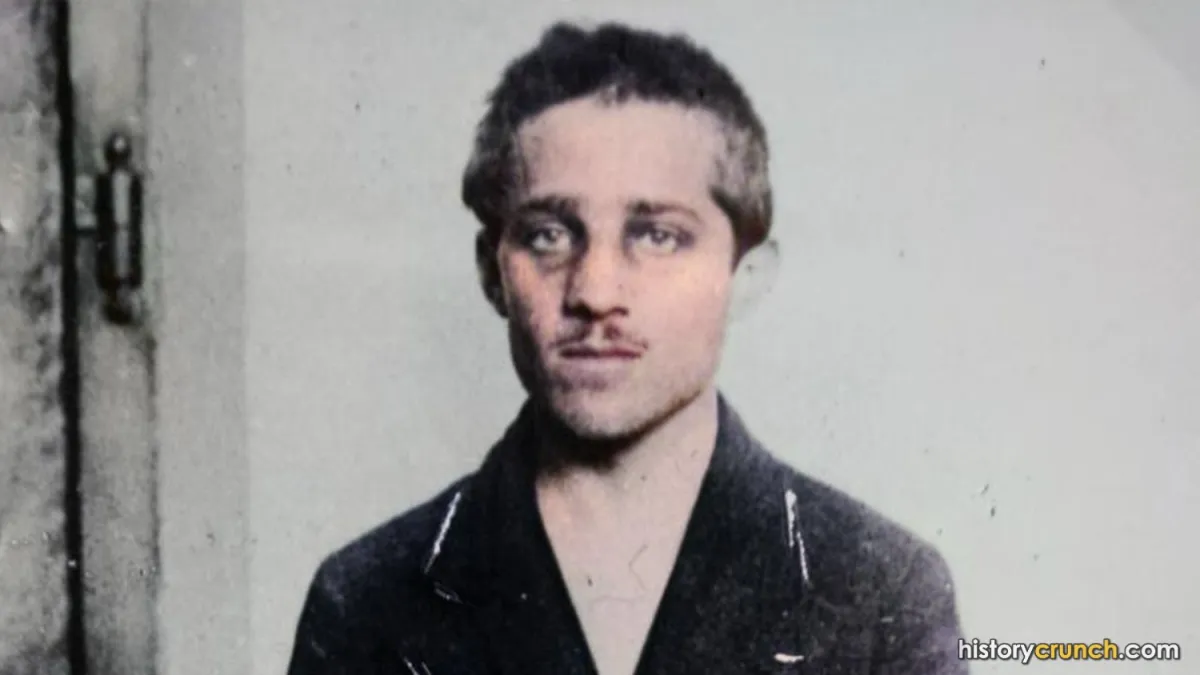 Photo: Gavrilo Princip, via crunchlearning.com
Meanwhile, Franz Ferdinand—shaken but unharmed—decided to visit the hospital to check on the people injured in the bombing. But here's where everything went sideways: his driver, Leopold Lojka, had never been to Sarajevo before and didn't know the way to the hospital.
The Wrong Turn Heard 'Round the World
General Oskar Potiorek, the military governor riding with the Archduke, was supposed to give directions. But in the confusion, he guided the driver down the original parade route instead of toward the hospital.
When Potiorek realized his mistake, he shouted for the driver to stop and turn around. Leopold Lojka hit the brakes and began backing up—right in front of Schiller's Delicatessen.
Gavrilo Princip was just finishing his sandwich when the most important man in the Austro-Hungarian Empire's car stopped directly in front of him, maybe five feet away.
Princip couldn't believe his luck. He walked up to the car and shot both Franz Ferdinand and his wife Sophie at point-blank range. They were dead within minutes.
How One Murder Became 20 Million Deaths
What happened next was like watching dominoes fall in slow motion, except each domino was a major European power and millions of lives hung in the balance.
Austria-Hungary declared war on Serbia. Russia, bound by treaty, mobilized to defend Serbia. Germany, allied with Austria-Hungary, declared war on Russia. France, allied with Russia, found itself at war with Germany. Germany invaded Belgium to attack France, bringing Britain into the conflict.
Within six weeks of Princip's sandwich break, most of Europe was at war.
The Teenager Who Accidentally Changed Everything
Gavrilo Princip was too young to be executed under Austrian law, so he was sentenced to 20 years in prison. He died of tuberculosis in 1918, just as the war he accidentally started was finally ending.
Princip never lived to see the full consequences of his impulsive decision outside a delicatessen. World War I killed an estimated 20 million people, toppled four empires, redrew the map of Europe, and set the stage for World War II.
All because a teenage nationalist got hungry and a driver took a wrong turn.
The Butterfly Effect in Real Time
Historians love to debate whether World War I was inevitable—whether the tensions in Europe were so high that any spark would have ignited the powder keg. Maybe they're right.
But it's impossible to ignore the sheer absurdity of how it actually happened. The most devastating conflict in human history wasn't triggered by a master plan or a calculated political move. It was triggered by a series of amateur mistakes, a lunch break, and a driver who couldn't find the hospital.
If Leopold Lojka had known Sarajevo's streets better, if Gavrilo Princip had chosen a different restaurant, if any of the other five assassins had been slightly more competent—the entire 20th century might have unfolded differently.
Instead, one wrong turn on a summer afternoon in 1914 accidentally set the stage for everything that followed: the Russian Revolution, the rise of fascism, World War II, the Cold War, and the modern world order.
Sometimes history really does turn on the smallest moments. And sometimes those moments happen over lunch.