The Cook Who Never Got Sick
Mary Mallon felt perfectly fine on March 27, 1915, when health officials dragged her from a Manhattan kitchen and loaded her onto a boat bound for North Brother Island. She would spend the next 23 years there—until her death in 1938—imprisoned not for any crime she committed, but for a biological quirk she never knew she possessed and a social status she couldn't change.
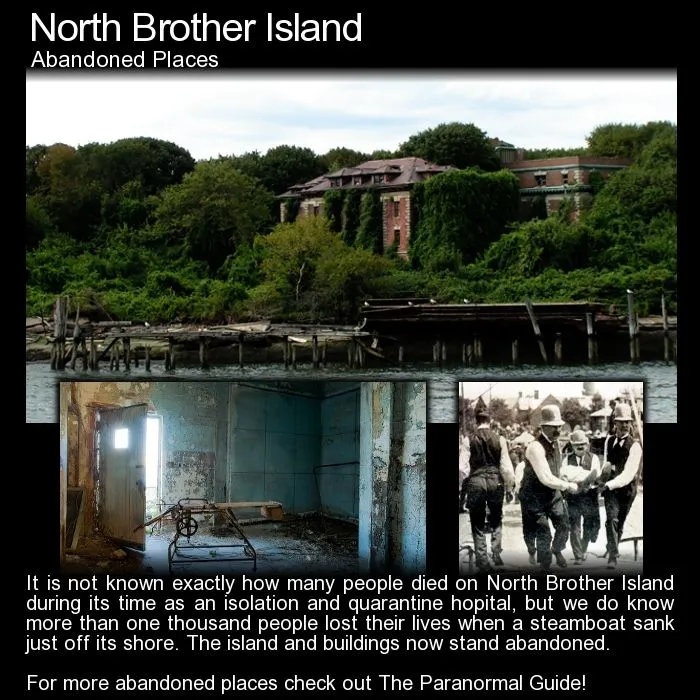 Photo: North Brother Island, via i.pinimg.com
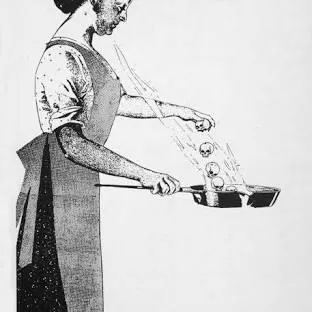 Photo: Mary Mallon, via gosharpener.com
The woman history remembers as "Typhoid Mary" was actually a medical marvel: a healthy carrier of typhoid fever who could spread the disease without ever experiencing symptoms herself. But her story isn't really about medicine—it's about how early 20th-century America invented the concept of public health detention by getting almost everything spectacularly wrong.
The Invisible Threat in Plain Sight
Mallon, an Irish immigrant who worked as a cook for wealthy New York families, had been unknowingly spreading typhoid through her signature dish: fresh peach ice cream. The bacteria lived harmlessly in her gallbladder, shedding into everything she touched. Between 1900 and 1907, she infected at least 47 people across seven households, killing three.
The twist? She had no idea. Mallon genuinely believed the health authorities were persecuting her for being Irish, poor, and female. "I have never had typhoid in my life," she wrote in a letter to her lawyer. "I am an innocent human being suffering because I cannot fight as rich people can."
She wasn't entirely wrong.
The Hunt for Patient Zero
The case that changed everything began in August 1906 at a rented house in Oyster Bay, Long Island. The affluent Warren family was enjoying their summer vacation when six of eleven household members suddenly fell violently ill with typhoid fever. The local doctor was baffled—typhoid typically spread through contaminated water, but the house had modern plumbing and a private well.
Charles Warren hired sanitary engineer George Soper to solve the mystery. Soper, a methodical man who approached disease outbreaks like crime scenes, quickly eliminated the usual suspects: water, milk, and sewage. That left one variable: the cook.
 Photo: George Soper, via alchetron.com
Mary Mallon had worked for the family for just three weeks before disappearing right around the time people started getting sick. Soper began tracking her employment history and found a disturbing pattern. Every household where Mallon had worked had experienced unexplained typhoid outbreaks.
The Confrontation That Started It All
In March 1907, Soper tracked Mallon to a Park Avenue mansion where she was working for the Bowen family. He approached her in the kitchen and politely explained that she was likely a typhoid carrier who needed medical testing.
Mallon's response was swift and violent. She grabbed a carving fork and chased Soper out of the house, screaming that he was a liar trying to destroy her livelihood. "She came at me with a long kitchen knife," Soper later wrote. "I retreated in haste."
Soper returned with five police officers and Dr. Sara Josephine Baker from the New York Department of Health. They found Mallon barricaded in an outhouse behind the house. It took all five officers to subdue her and force her to submit to medical testing.
The Island Prison Nobody Talks About
North Brother Island, a 20-acre speck of land in the East River between the Bronx and Rikers Island, served as New York's quarantine facility for infectious diseases. The island housed a hospital, staff quarters, and isolation cottages for patients deemed too dangerous for mainland treatment.
Mallon was given a one-room cottage and told she would remain there until she agreed to have her gallbladder removed—the only known cure for her condition. She refused, arguing that she wasn't sick and didn't need surgery. The standoff lasted three years.
During her isolation, Mallon taught herself to read medical journals, becoming an expert on typhoid transmission. She wrote letters to newspapers arguing her case and hired a lawyer to challenge her detention. "I am imprisoned without trial," she wrote. "I am held like a leper through no fault of my own."
The Double Standard Nobody Mentioned
Here's where Mallon's story gets truly bizarre: she wasn't the only healthy typhoid carrier in New York. Health officials had identified at least 400 others by 1909, including several food handlers. Yet only Mallon was forcibly detained.
The others—mostly male, mostly white, mostly middle-class—were simply asked to avoid food service jobs and report for periodic testing. Some complied, others didn't. None were imprisoned.
Dr. Baker later admitted the disparity in her memoirs: "Mary was a dangerous character because she was a cook and because she was Irish and because she was a woman and because she was poor." The combination, Baker wrote, made her "the perfect scapegoat for a public health system that needed someone to blame."
Freedom, Betrayal, and Life Imprisonment
In 1910, after intense legal pressure, health officials released Mallon on the condition that she never work as a cook again and submit to regular medical monitoring. She agreed, signed the papers, and walked off North Brother Island a free woman.
For five years, she kept her word, working as a laundress and housekeeper under various assumed names. But domestic work paid a fraction of what skilled cooks earned, and Mallon struggled financially. In 1915, desperate for better wages, she took a cooking job at Sloane Hospital for Women using the name "Mrs. Brown."
Within two months, 25 people at the hospital had contracted typhoid. Two died. Health officials tracked down "Mrs. Brown" and discovered their worst nightmare: Typhoid Mary was back in the kitchen.
The Life Sentence Nobody Could Justify
This time, there would be no release. Mallon was returned to North Brother Island and told she would remain there for the rest of her life. No trial, no appeal process, no legal representation—just indefinite detention based on her biological status and one moment of desperation.
She spent her final 23 years as the island's most famous prisoner, working as a laboratory assistant and helping care for other quarantined patients. The irony was lost on no one: the woman too dangerous to cook was trusted to handle medical samples and assist with patient care.
Mallon suffered a stroke in 1932 that left her partially paralyzed. She died six years later, still in custody, having spent 26 of her 69 years imprisoned for the crime of being biologically unlucky while socially powerless.
The Legal Precedent That Changed Everything
Mallon's case established the legal framework for involuntary quarantine that America still uses today. Her detention was never successfully challenged in court, creating precedent that public health authorities could indefinitely imprison individuals deemed dangerous to community health.
The Supreme Court has never directly ruled on the constitutionality of indefinite health detention, meaning Mallon's case remains the de facto legal standard. During the COVID-19 pandemic, several states dusted off laws written in response to her case to justify quarantine enforcement.
The Ghost of North Brother Island
Today, North Brother Island sits abandoned, slowly being reclaimed by nature. The hospital buildings where Mallon lived are crumbling ruins covered in vines. Her cottage is gone, demolished decades ago, leaving only a foundation and a small plaque that reads: "Mary Mallon, 1869-1938. Typhoid Carrier."
No mention of the 26 years. No acknowledgment of the legal precedent. No recognition that her imprisonment helped establish the principle that public health could override individual rights with virtually no oversight.
Mallon's story isn't really about disease—it's about power, prejudice, and the dangerous precedent set when fear overrides fairness. She remains the only healthy person in American history to be imprisoned for life based solely on their potential to spread disease, a distinction that says more about early 20th-century justice than it does about public health.
In the end, Mary Mallon was guilty of exactly what she claimed: being Irish, poor, and female in an America that had little patience for any of the three.