Hump Day Heroes: When the U.S. Army's Camel Cavalry Almost Conquered the Wild West
Hump Day Heroes: When the U.S. Army's Camel Cavalry Almost Conquered the Wild West
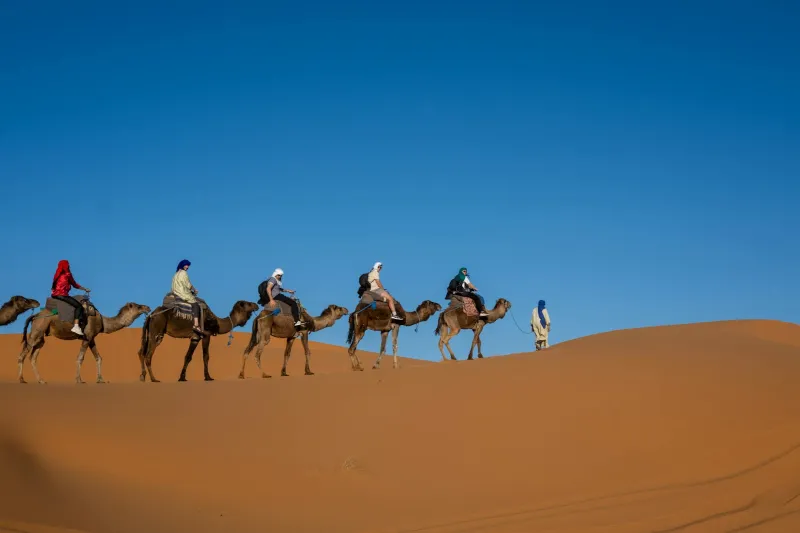
Picture this: U.S. cavalry soldiers patrolling the Arizona desert, but instead of horses, they're riding camels imported from the Middle East, complete with Turkish and Greek camel drivers shouting commands in foreign languages. It sounds like something out of a fever dream, but for a brief moment in the 1850s, the American Southwest was home to an official U.S. Army Camel Corps that worked so well it might have changed the entire history of westward expansion — if the Civil War hadn't made everyone forget camels existed.
The Surprisingly Logical Beginning
The idea started with Jefferson Davis, who would later become president of the Confederacy but in the 1850s was serving as Secretary of War under President Franklin Pierce. Davis was facing a practical problem: how to supply and patrol the vast, newly acquired territories of the American Southwest.
Traditional horses and mules struggled in the desert climate. They needed constant water, couldn't carry heavy loads across long distances, and frequently died from the heat and harsh conditions. Meanwhile, Davis had been reading reports from American diplomats and military observers in the Middle East, who were amazed by camels' ability to carry enormous loads across desert terrain without water for days.
In 1855, Davis convinced Congress to appropriate $30,000 — about $1 million in today's money — to import camels and test their effectiveness as American military pack animals. It wasn't some wild experiment; it was a logical response to a genuine logistical challenge.
The Great Camel Shopping Trip
Major Henry Wayne was dispatched to the Mediterranean with a converted Navy ship to purchase the best camels money could buy. This wasn't a casual shopping expedition — Wayne spent months traveling through Egypt, Turkey, and Tunisia, consulting with camel breeders and learning about different breeds.
He returned in 1856 with 33 camels and a crew of Middle Eastern camel drivers who had agreed to come to America to teach the Army how to handle their new acquisitions. The camels included both dromedaries (one hump) and Bactrian camels (two humps), carefully selected for their size, temperament, and load-carrying capacity.
The ship's arrival in Texas was a sensation. Local newspapers covered the "camel invasion" with a mixture of fascination and bewilderment. Americans had never seen anything like these strange, smelly, surprisingly large creatures that seemed perfectly designed for conditions that killed horses.
Desert Superiority Confirmed
The initial tests were remarkably successful. Camels could carry 600-800 pounds each — more than twice what a mule could manage. They could go for days without water in conditions that would kill horses within hours. They ate desert vegetation that other animals couldn't digest, making them essentially self-feeding in terrain where horses required imported feed.
Most impressively, they proved incredibly hardy. While Army horses regularly died from desert conditions, the camels thrived. They were faster than expected, more intelligent than horses, and seemed almost immune to the environmental challenges that made desert patrol so difficult for traditional cavalry.
One famous test involved a camel caravan traveling from Texas to California, covering over 1,200 miles of some of the most challenging terrain in North America. The camels completed the journey easily, while comparison groups using horses and mules suffered significant casualties and delays.
Cultural Complications
But success in logistics didn't translate to success in military culture. American soldiers hated the camels. The animals were smelly, bad-tempered, and completely alien to men raised around horses. Worse, the camels spooked horses, making it impossible to use both animals together.
The Middle Eastern camel drivers, essential for the program's success, faced constant cultural conflicts with American soldiers. Language barriers, religious differences, and mutual cultural misunderstandings created ongoing tension. Some drivers eventually gave up and returned home; others stayed but remained perpetual outsiders in military communities.
Most problematically, the camels required specialized knowledge that the Army wasn't interested in developing. Soldiers wanted to treat camels like horses, but camels needed different care, different commands, and different handling techniques. The Army's institutional culture simply couldn't adapt to managing animals that required genuine expertise.
The Civil War Interruption
Just as the Camel Corps was proving its practical value, the Civil War erupted. Suddenly, the Army had more pressing concerns than experimenting with desert logistics. Jefferson Davis, the program's main advocate, was now leading the Confederacy. Military resources were redirected to fighting a war, not perfecting camel cavalry.
The camels were scattered to various Army posts and essentially forgotten. Some were sold to circuses and private individuals. Others were simply turned loose in the desert. The institutional knowledge about camel care evaporated as soldiers were reassigned and the Middle Eastern drivers left or died.
By 1866, the official U.S. Army Camel Corps was quietly disbanded, not because it had failed, but because no one in the post-war Army remembered why it had existed in the first place.
The Great Camel Diaspora
What happened next was even stranger than the original experiment. Dozens of camels, both escaped and deliberately released, began roaming the American Southwest. For decades afterward, travelers reported encounters with wild camels wandering through Arizona, New Mexico, and Texas.
These sightings became the stuff of legend. Cowboys told stories of mysterious camel herds appearing out of desert mirages. Native American tribes incorporated camel encounters into their oral histories. Local newspapers occasionally reported camel sightings well into the 1920s, though by then most were probably tall tales rather than actual encounters.
One famous camel, nicknamed the "Red Ghost," was reportedly spotted across Arizona for years, always carrying what appeared to be a human skeleton on its back. The skeleton was supposedly the remains of a soldier who had been tied to the camel as punishment and died when the animal escaped.
The Road Not Taken
The failure of the U.S. Army Camel Corps represents one of history's most successful failed experiments. By every practical measure, the program worked exactly as intended. Camels proved superior to horses for desert operations, more economical to maintain, and perfectly suited to the environmental challenges of the American Southwest.
If the Civil War hadn't interrupted the experiment, and if the Army had been willing to adapt its culture to accommodate camel logistics, the entire history of western expansion might have been different. Desert campaigns against Native American tribes might have been more effective. Supply lines to California might have been more reliable. The development of railroad routes might have followed different paths.
Instead, the American military forgot about camels and continued struggling with horse-based logistics in desert terrain for decades. It's one of the most practical innovations in American military history that was abandoned not because it didn't work, but because everyone simply forgot it existed.
Today, the only reminders of America's brief camel cavalry experiment are historical markers, museum exhibits, and the occasional tall tale about mysterious camel sightings in the desert. But for a few years in the 1850s, the U.S. Army almost revolutionized desert warfare with an innovation so successful that everyone forgot how successful it was.