Honor Guard Nightmare: The 30-Year Mystery of America's Most Sacred Unknown Soldier Who Wasn't Unknown at All
The Most Sacred Lie in American Military History
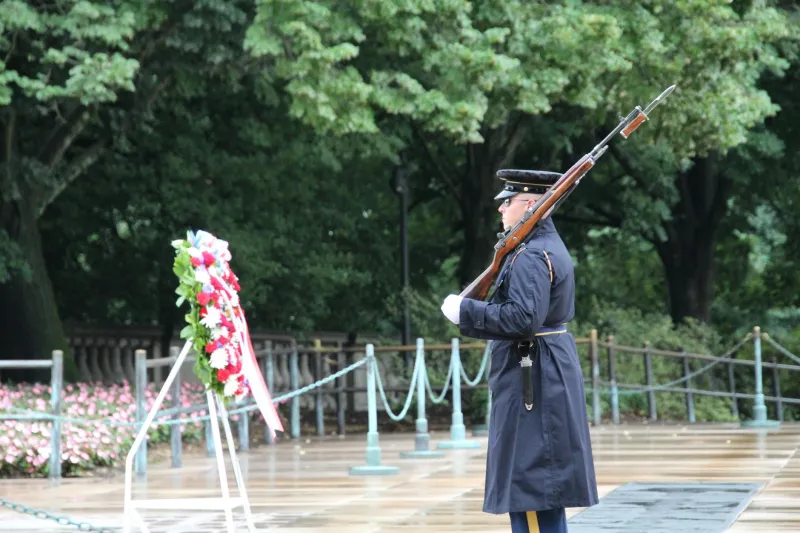
Every year, millions of visitors stand in silent reverence before the Tomb of the Unknown Soldier at Arlington National Cemetery. The marble monument represents the ultimate sacrifice — anonymous heroes who gave their lives for their country, their identities lost forever to the fog of war.
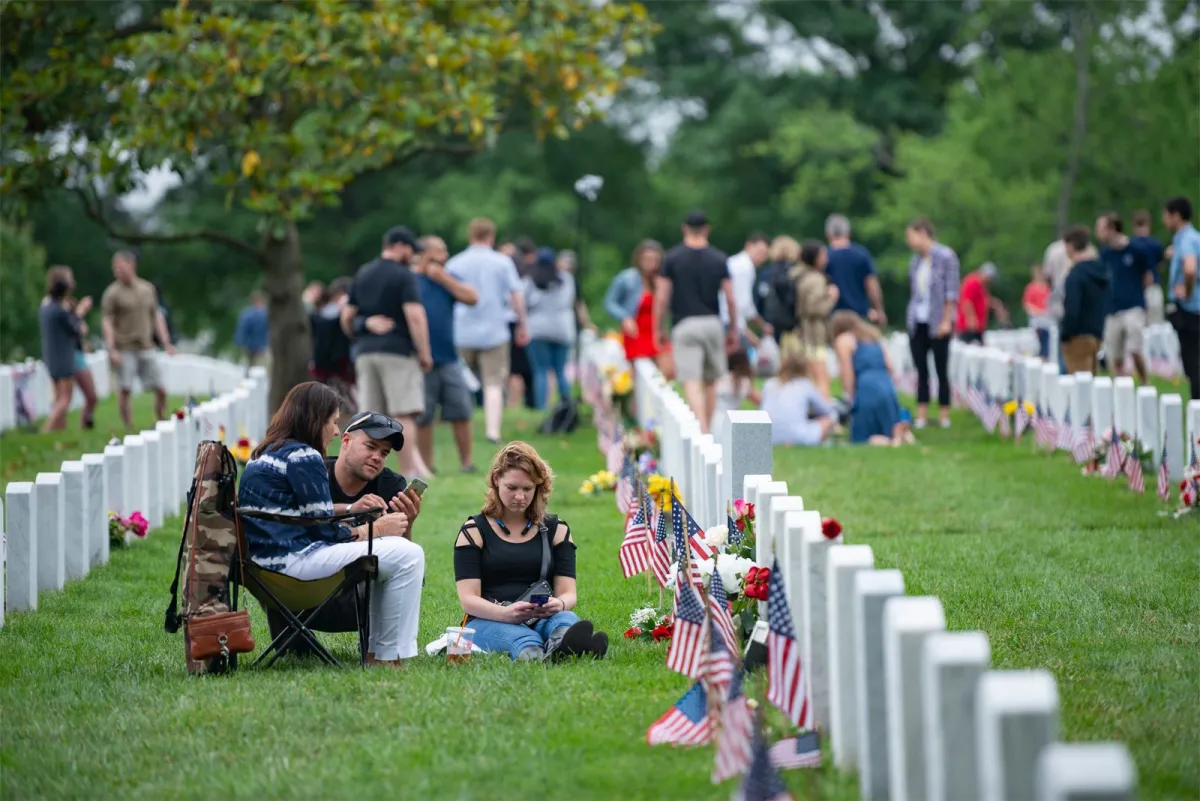 Photo: Arlington National Cemetery, via cdn.britannica.com
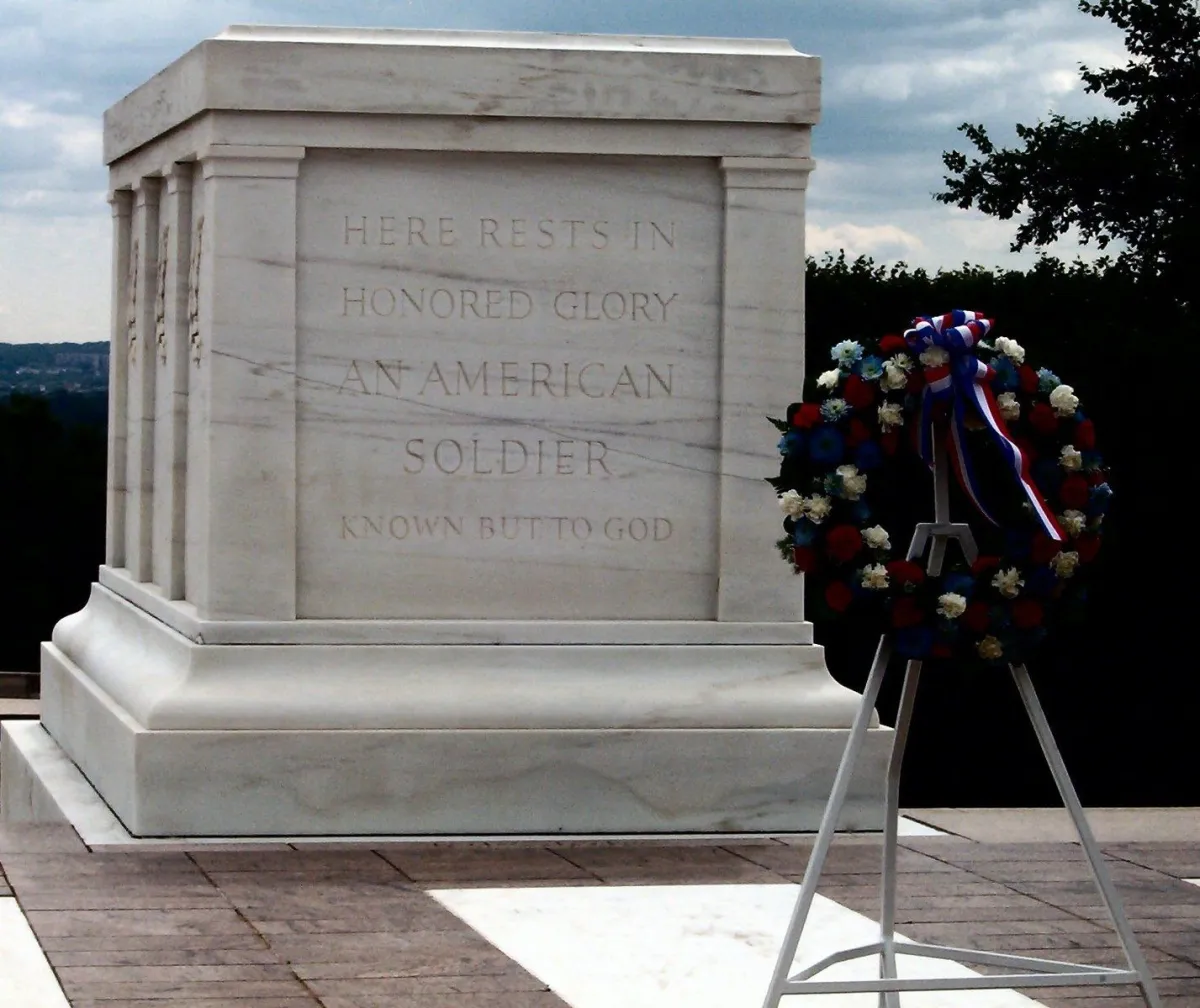 Photo: Tomb of the Unknown Soldier, via images.freeimages.com
Except for 30 years, one of those "unknown" soldiers wasn't unknown at all.
When Symbolism Trumped Truth
In 1984, President Ronald Reagan presided over a solemn ceremony as the remains of an unidentified Vietnam War casualty were interred in the tomb's third crypt. The decision to add a Vietnam unknown had been years in the making — a way to honor the controversial war's fallen and provide closure for families of the missing.
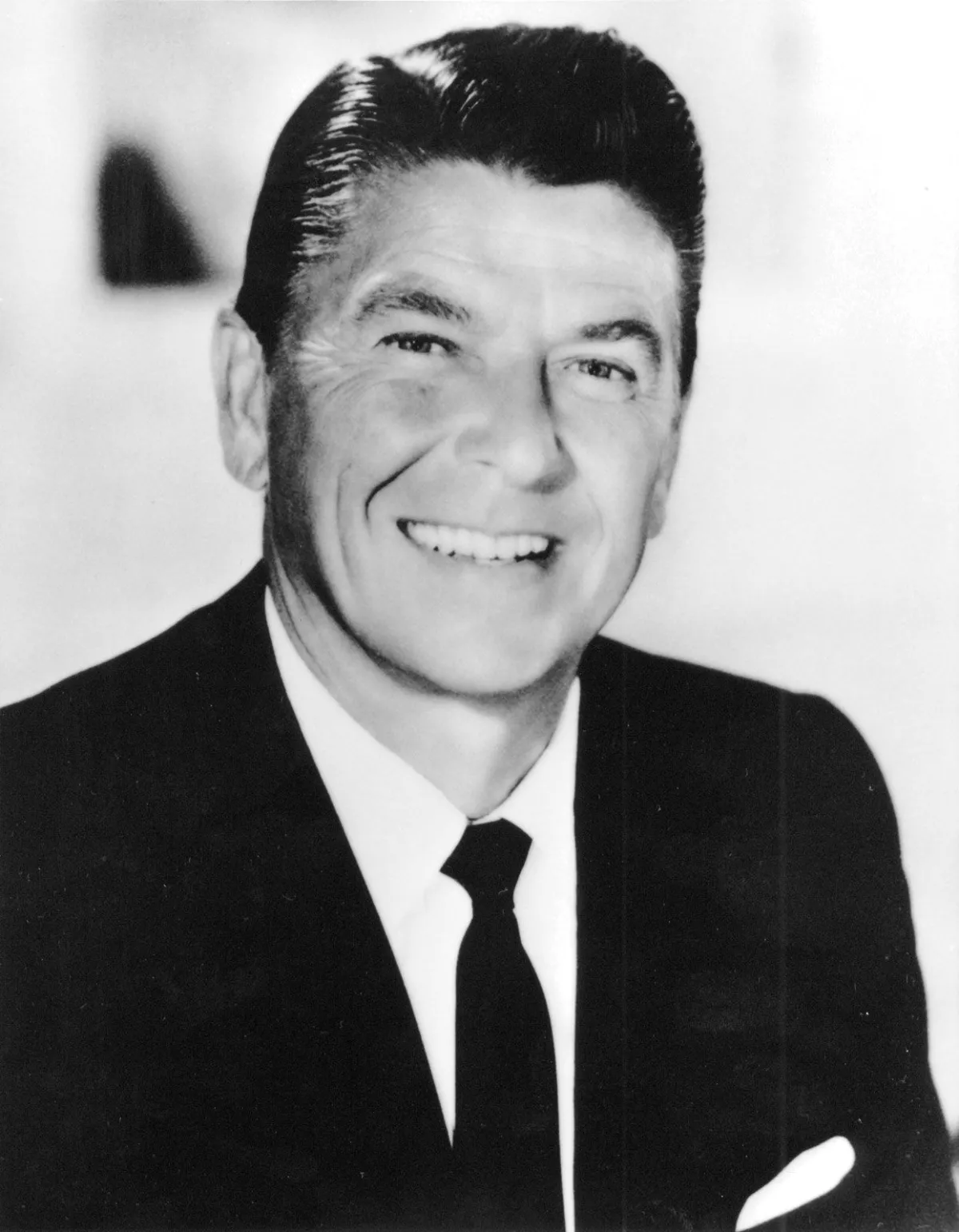 Photo: Ronald Reagan, via cdn.britannica.com
But here's where reality gets stranger than fiction: military officials already suspected they knew exactly who was in that flag-draped casket.
The remains belonged to Air Force First Lieutenant Michael Joseph Blassie, a 24-year-old pilot from St. Louis whose A-37 Dragonfly had been shot down over South Vietnam in 1972. When his crash site was discovered six years later, investigators recovered partial remains along with his wallet, ID card, and other personal effects.
Despite this evidence, the military classified the remains as "unidentifiable" and shipped them to Hawaii's Central Identification Laboratory. There, forensic specialists noted the evidence pointing to Blassie's identity but were overruled by Pentagon officials who desperately needed an unknown soldier for the upcoming ceremony.
The Family That Refused to Give Up
While America honored their "unknown" hero, the Blassie family fought a different battle. Michael's mother, Patricia, had spent years pushing for answers about her son's fate. When she learned about the timing of the unknown soldier's burial and the location where the remains were found, she began connecting dots that officials preferred to keep separate.
For over a decade, Patricia Blassie petitioned the military for DNA testing. Each request was denied. Officials cited the sanctity of the tomb and the importance of maintaining the unknown soldier's anonymity. What they didn't mention was that breaking that anonymity would expose one of the most embarrassing cover-ups in military history.
The Science That Couldn't Be Ignored
By the 1990s, advances in DNA technology made the military's position increasingly untenable. When CBS News began investigating discrepancies in the unknown soldier's story, pressure mounted for definitive testing.
In 1998, fourteen years after the burial, the Pentagon finally authorized DNA analysis. The results confirmed what Patricia Blassie had suspected all along — and what military officials had known from the beginning.
The comparison was conclusive: the remains belonged to her son Michael.
Unraveling Three Decades of Deception
The revelation sent shockwaves through the military establishment. Internal documents later revealed that multiple officials had questioned the identification process during the 1980s. Some had explicitly recommended against using Blassie's remains for the tomb, arguing that too much evidence pointed to his identity.
Their concerns were dismissed by Pentagon leadership who prioritized the symbolic importance of having a Vietnam unknown over the accuracy of that symbolism.
The cover-up had been remarkably thorough. Evidence files were buried in bureaucratic limbo. Key personnel were transferred or retired. The family's requests for information were stonewalled with claims that records had been lost or destroyed.
The Uncomfortable Reckoning
On May 14, 1998, Michael Blassie's remains were disinterred from the Tomb of the Unknown Soldier in a ceremony that was notably less public than his burial had been. He was finally laid to rest in his hometown of St. Louis, where his gravestone bears his name — something that should have happened 26 years earlier.
The Vietnam crypt at Arlington now stands empty, a stark reminder of the incident. Military officials determined that no other unidentified remains from the Vietnam War met their criteria for burial at the tomb, largely because modern identification techniques had advanced to the point where truly "unknown" soldiers had become virtually impossible.
The Price of Patriotic Theater
The Blassie case exposed an uncomfortable truth about how national symbols sometimes clash with individual justice. For three decades, the most sacred military memorial in America had been built on a foundation of willful ignorance — a known soldier masquerading as an unknown one because the symbolism was deemed more important than the truth.
Patricia Blassie, who died in 2008, spent the final years of her life advocating for other military families searching for missing loved ones. Her victory in reclaiming her son had come at the cost of exposing how easily institutional mythology could override factual reality.
Today, honor guards continue their silent vigil at the Tomb of the Unknown Soldier, watching over two anonymous heroes from World War I and World War II. The empty third crypt serves as an unintended monument to the power of DNA science, persistent mothers, and the occasionally uncomfortable intersection of truth and tradition.
Sometimes the most patriotic act is admitting when patriotism itself has gone wrong.