The Town That Shouldn't Exist: How a Government Copyright Trap Accidentally Became a Real Place

Photo by Photo by bob marino on Unsplash on Unsplash
The Town That Shouldn't Exist: How a Government Copyright Trap Accidentally Became a Real Place
There is a philosophical puzzle that geography professors sometimes use to unsettle their students: what makes a place real? Is it the people who live there? The buildings? The roads? The name on a sign? Or is it something more abstract — a collective agreement that a particular point on the earth's surface deserves to be recognized as distinct from every other point?
Agloe, New York, a tiny crossroads in the Catskill Mountains, is the strangest possible answer to that question. It was invented by bureaucrats as a lie. It became real because someone believed the lie. And then it became a philosophical puzzle that cartographers, lawyers, and a surprising number of novelists have been arguing about ever since.
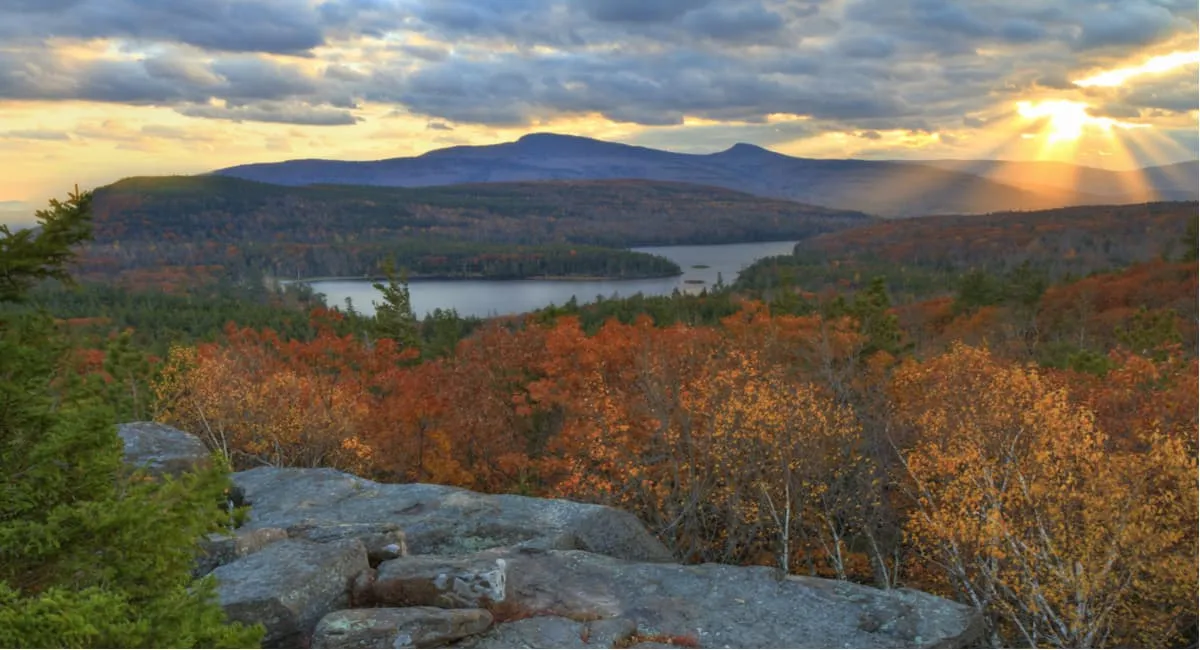 Photo: Catskill Mountains, via peakvisor.com
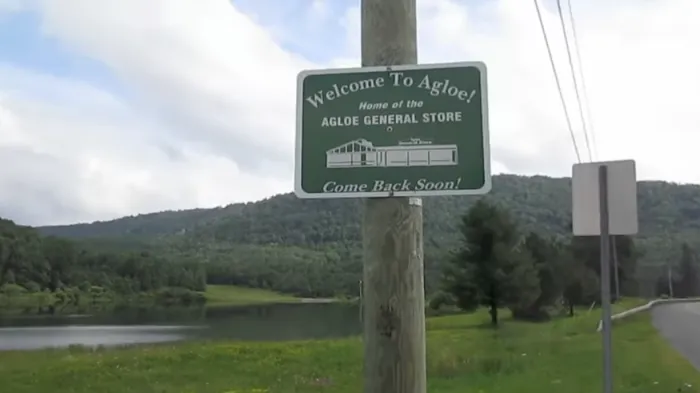 Photo: Agloe, New York, via i.pinimg.com
The Art of the Fictional Place
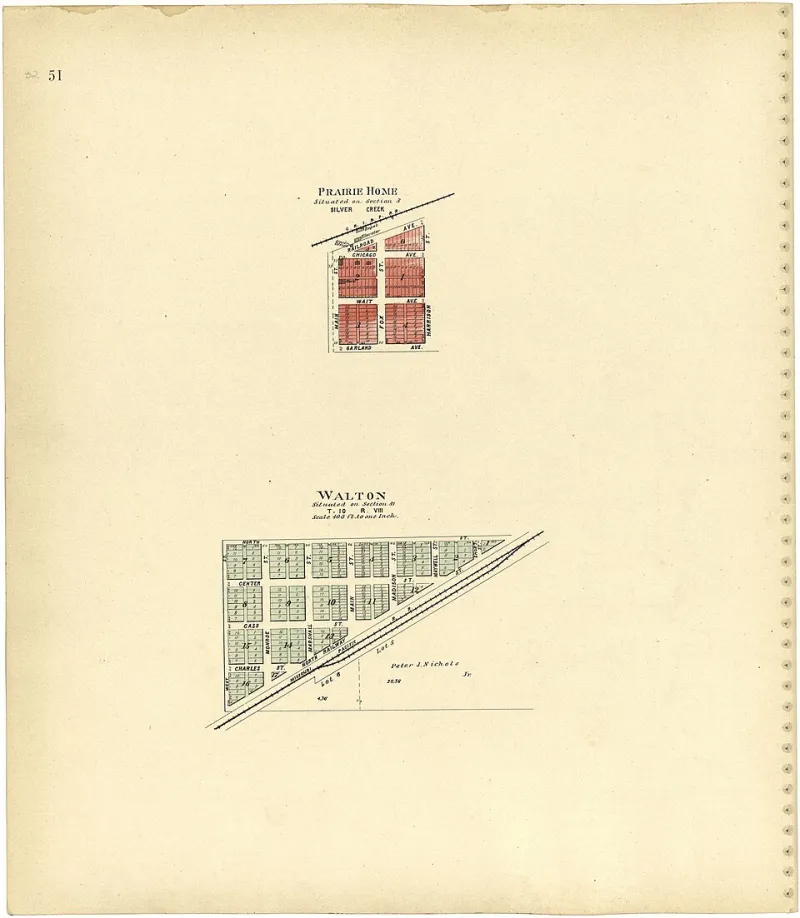
Mapmakers have been hiding fake locations in their work for longer than most people realize. The practice goes by a few names — trap streets, paper towns, copyright traps — and the principle is simple: if you invent a street, a town, or a geographic feature that doesn't exist and hide it in your map, you can catch competitors who copy your work. If a rival publisher's map shows the same fictional element, they didn't do their own surveying. They stole from you.
It's an elegant solution to a genuine problem. Maps are extraordinarily expensive to produce. Sending surveyors into the field, compiling data, drafting and printing — the investment is enormous. Copyright law protects the expression of factual information but has always been murky on the facts themselves. Trap streets gave mapmakers a practical enforcement tool that the law alone couldn't provide.
In the 1930s, General Drafting Company — one of the major American cartographic firms of the era — planted one of these traps in the Catskill Mountains of New York. They called it Agloe, a name constructed from the initials of two company employees: Otto G. Lindberg and Ernest Alpers. O.G. + L.A., scrambled slightly, became Agloe. They placed it at a rural crossroads in Delaware County, near the small town of Roscoe, and waited to see if anyone would bite.
The Trap That Swallowed Itself
Rand McNally bit. The rival cartography company published a map that included Agloe, New York — clear evidence, General Drafting argued, that they had copied the work without permission. Rand McNally prepared to defend themselves.
And then things got philosophically complicated.
Sometime in the mid-20th century — the exact date is fuzzy, which is fitting — an entrepreneur had built a small general store at the Agloe crossroads. It was called, naturally, the Agloe General Store. The owner had presumably seen the name Agloe on a map, assumed it was the name of the local area, and used it for the business. Why not? It was right there on the map.
When Rand McNally's lawyers pointed this out, the argument against them became considerably more complicated. Yes, they had included Agloe on their maps. But Agloe now existed. There was a building there. It had a name. People knew it by that name. At what point does a fictional place, believed in and acted upon by enough people, become a real one?
The Agloe General Store eventually closed, as small rural stores tend to do. But the name didn't disappear with it. It had taken root in the local consciousness, in county records, in the muscle memory of mapmakers who kept including it because it had been there before. Agloe persisted.
The Map That Wouldn't Let Go
For decades, Agloe appeared on maps with a kind of zombie persistence. It would be removed, then reappear. Different publishers included it for different reasons — some because they'd copied it from a source that had it, some because local records seemed to support its existence, some possibly because nobody bothered to question it.
Google Maps included Agloe as recently as 2014, listing it as a hamlet in Delaware County, New York. The listing attracted attention from people who drove out to find it and discovered, as you might expect, a rural crossroads without much to distinguish it from any other rural crossroads in the Catskills.
But here's the thing: people went looking. And some of them, finding nothing, built the nothing into something — a destination, a pilgrimage site for people interested in the philosophy of place, a location worth visiting precisely because of its ambiguous status between real and imagined.
John Green used Agloe as a plot element in his 2008 novel Paper Towns, which brought the story to a massive young adult audience and generated a new wave of interest in the crossroads. The movie adaptation in 2015 brought it to an even wider audience. Agloe, the fictional town, had become famous. Which is arguably the most real thing a place can be.
 Photo: John Green, via www.gannett-cdn.com
What Makes a Place Real, Anyway?
The Agloe story resists easy conclusions because the question at its center resists easy answers. The crossroads in Delaware County is real in the sense that you can drive to it. The name Agloe is real in the sense that people use it and recognize it. The history of the place is real in the sense that it happened and left traces. But the town itself — if a town requires residents, institutions, a functioning civic identity — never quite materialized.
What Agloe actually is, in the end, is a demonstration of how maps don't just record reality. They create it. When General Drafting put a name on a crossroads, they set in motion a chain of events that produced a general store, a legal dispute, a novel, a film, and a genuine entry in the American geographic imagination. The lie became true not because anyone decided it should, but because enough people treated it as though it already was.
That's either deeply reassuring or deeply unsettling, depending on how much you trust the maps you navigate by.
The crossroads is still there. You can visit it. Whether you're visiting Agloe when you do is, as always, a matter of some debate.