Rest in Peace, Registered Voter: The Clerical Error That Turned a Cemetery Into a City District
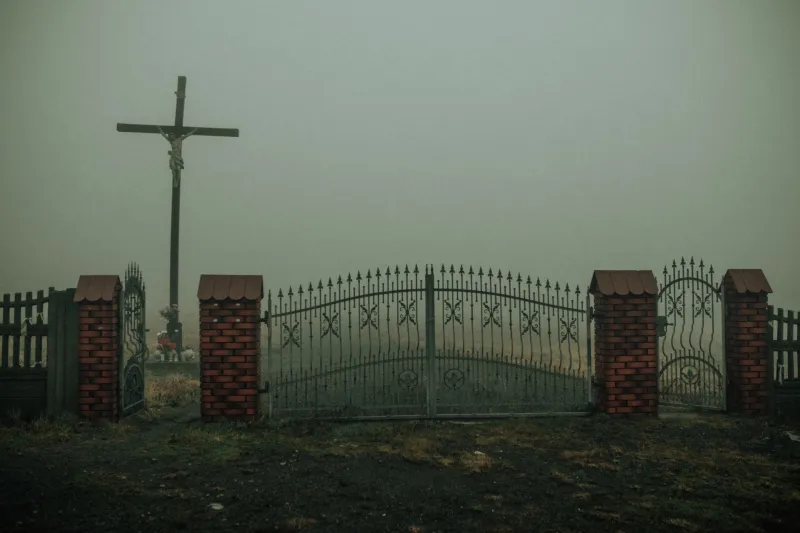
Most cities grow by absorbing neighborhoods, farmland, or commercial strips along their edges. They annex roads, subdivisions, maybe a strip mall or two. They do not typically annex cemeteries — not intentionally, anyway.
But intention, as any municipal clerk will tell you, is only as good as the paperwork behind it. And in one small Midwestern town in the early twentieth century, the paperwork was very, very bad.
The Expansion That Went One Plot Too Far
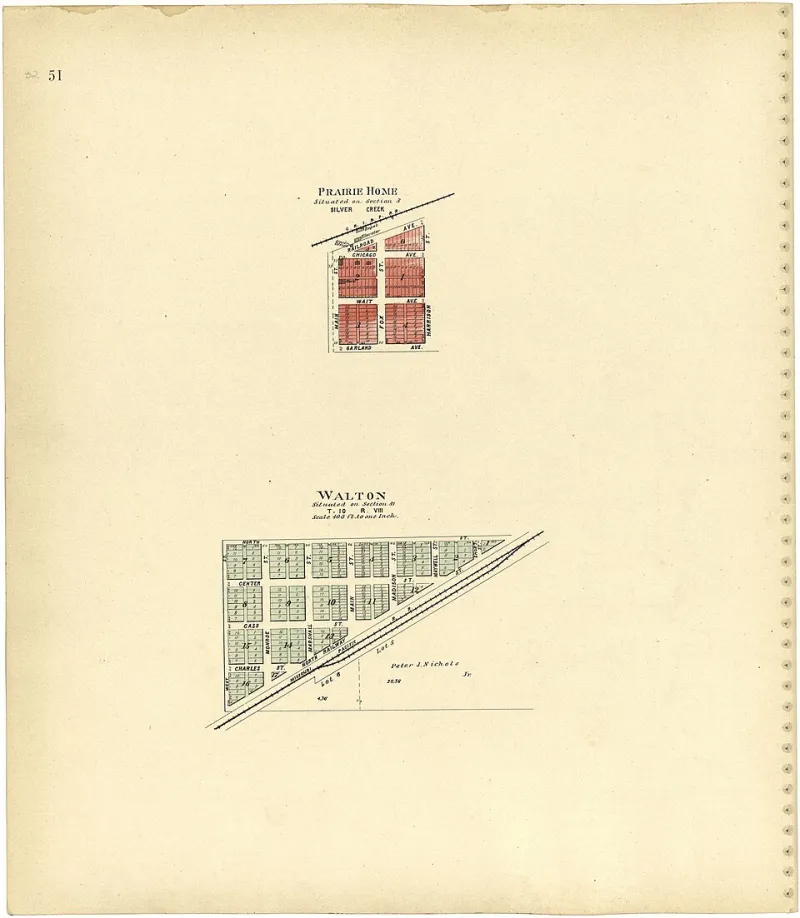
The town — a modest community of a few thousand residents built around the kind of light industry and agricultural commerce that defined the Midwest in that era — decided in the early 1900s to formally expand its city limits. Growth had pushed development outward, and the boundaries drawn at the town's founding no longer reflected where people actually lived and worked. A new boundary survey was ordered, a legal description was drafted, and the whole thing was submitted to the county for official recording.
Somewhere in that process, a coordinate got transposed, or a property line was misread, or a clerk copied a number incorrectly from one document to another. The exact nature of the error has been debated by local historians ever since. What is not debated is the result: the new city boundary, as legally recorded, extended slightly further than intended and wrapped around the edge of a fully operational municipal cemetery that had been quietly burying residents for decades.
The cemetery did not become part of the city in any practical sense. No city services were extended to it. No roads were improved. No streetlights were installed. But on paper — in the official legal record of the city's boundaries — it was now, unambiguously, within city limits.
For a few years, nobody noticed.
The Tax Assessor's Very Bad Morning
The discovery, when it came, arrived the way most municipal disasters do: through a routine audit. A county tax assessor, working through a standard review of properties within city limits, encountered the cemetery parcel and dutifully added it to the assessment rolls.
This created an immediate and delightful problem. The cemetery was owned by the town itself — meaning the city now technically owed property taxes to itself on land it had accidentally incorporated. The accounting required to process this was, by all accounts, spectacular in its pointlessness. Money moved from one municipal ledger to another, fees were calculated, credits were issued, and at the end of the process, nothing had changed except that several clerks had spent a great deal of time on paperwork that accomplished nothing.
But the tax issue was almost the simple part.
Zones of the Departed
Once the cemetery appeared on the official city map, it began generating complications at a rate that suggested it was making up for decades of quiet inactivity. Zoning boards had to classify it. The cemetery did not fit neatly into residential, commercial, or industrial categories, so a new designation had to be created — one that acknowledged the land was occupied, in a manner of speaking, but not in any way the zoning code had previously anticipated.
Then came the question of representation. The town was divided into districts for the purposes of local governance, and the cemetery now sat within a district. Whether this mattered in any practical sense was unclear, but the legal framework did not include an exception for districts whose constituents were uniformly deceased. The cemetery was assigned to a ward. It had a representative. That representative never received any correspondence from the cemetery's residents, which, under the circumstances, was probably for the best.
At some point, a local attorney raised the question of whether the cemetery could, theoretically, be counted in population figures. The answer, after considerable legal back-and-forth, was no — but the fact that the question required a formal legal opinion says something about how thoroughly the original clerical error had embedded itself into the town's administrative DNA.
The Attempt to Un-Incorporate the Dead
Efforts to correct the boundary and remove the cemetery from city limits were made on at least two separate occasions over the following decades. Both attempts ran into the same fundamental obstacle: correcting a legally recorded boundary requires going through the same process as establishing one in the first place. Surveys must be commissioned, legal descriptions must be drafted, county approval must be obtained, and the whole package must be re-recorded.
Each time officials got close to completing that process, something else intervened. Funding ran short. A key official left office. A more pressing issue absorbed the town's administrative attention. The correction kept getting bumped down the priority list, and the cemetery kept sitting there in its ward, zoned for a use that no living resident would ever apply for.
Still Technically a City District
By most accounts, the cemetery's status within city limits was never formally corrected. The boundary adjustment that would have removed it simply never made it across the finish line, and at some point, the situation became old enough that it stopped feeling like a problem and started feeling like a quirk.
Local officials, when asked about it, tend to give the kind of answer that suggests they find the whole thing mildly embarrassing but not worth the paperwork to fix: the cemetery is in the city limits, it has been for over a hundred years, and nothing terrible has happened as a result.
The residents of the cemetery, for their part, have remained remarkably quiet about the arrangement.
Which, given the alternative, is probably the best possible outcome for everyone involved.