When Science Goes Wrong: The Lightning Rod Inventor Who Accidentally Set His City on Fire
The Shocking Truth About America's First Electrical Safety Device
Picture this: You're a Philadelphia homeowner in 1752, and the famous Benjamin Franklin has just invented something called a "lightning rod" that promises to protect your house from fire. You're one of the first to install it, feeling smugly superior to your old-fashioned neighbors. Then your house burns down in a mysterious fire that seems to have started from nowhere.
 Photo: Benjamin Franklin, via logodix.com
Welcome to one of history's most ironic disasters — when the man who literally wrote the book on electrical safety accidentally turned early adopters into unwitting arsonists.
The Best Intentions, The Worst Instructions
Franklin's lightning rod concept was genuinely brilliant: a metal rod on your roof would attract lightning strikes and safely conduct them into the ground, protecting your building. The science was sound. The execution? Well, that's where things got complicated.
The problem wasn't Franklin's design — it was his assumption that people would actually read his detailed installation instructions. In his original pamphlets, Franklin stressed the critical importance of proper grounding: the rod needed to be connected to a metal conductor that extended deep into moist earth, well away from the building's foundation.
But here's what actually happened: Philadelphia's eager early adopters saw "famous inventor Benjamin Franklin" and "lightning protection" and figured the details would sort themselves out. Many installed the rods correctly on their roofs, then connected them to whatever metal they had handy — iron pipes, copper gutters, or metal fixtures that ran directly into their wooden homes.
When Protection Becomes Destruction
What Franklin's fans had accidentally created was the world's first residential electrical distribution system — one designed to pump lightning strikes directly into their houses.
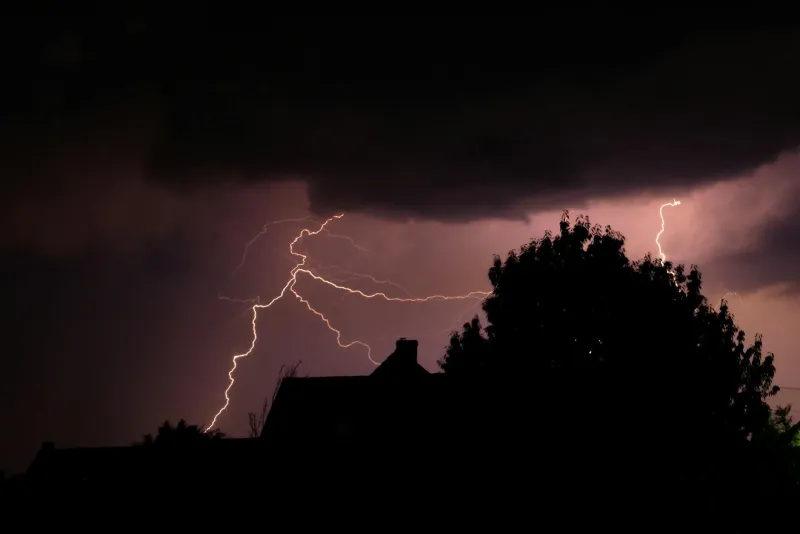
When storms hit Philadelphia in the mid-1750s, the results were catastrophically predictable. Lightning would strike the rod as intended, but instead of safely dispersing into the ground, the electrical charge would follow the path of least resistance through the home's metal fixtures, heating pipes and wires until they ignited surrounding wood.
Fire investigators were baffled. These weren't normal lightning fires — those typically started from direct strikes to roofs or trees. These mysterious blazes seemed to begin inside walls, near metal fixtures, in homes that should have been protected by Franklin's revolutionary invention.
The Famous Name Problem
The most frustrating part? Franklin himself tried to fix the problem. As reports of "lightning rod fires" reached him, he published corrections, clarifications, and increasingly urgent warnings about proper grounding techniques.
But Franklin had become a victim of his own celebrity. When people saw "Benjamin Franklin's Lightning Rod," they assumed the famous inventor's name was guarantee enough. Why read the fine print when you're buying from the guy who discovered electricity?
Local metalworkers and installers, eager to cash in on the Franklin brand, often skipped the complicated grounding requirements entirely. They'd sell "Franklin-style lightning rods" with minimal instructions, figuring customers just wanted the famous name on their roof.
The Slow Burn of Bureaucracy
The fire problem persisted for years because nobody wanted to admit that Franklin's invention was dangerous. Philadelphia's civic leaders had publicly celebrated their city's embrace of cutting-edge electrical science. Admitting that the lightning rods were causing fires would mean acknowledging that their forward-thinking residents had been accidentally burning down their own neighborhoods.
Insurance companies began quietly noting patterns — homes with lightning rods were filing claims at suspicious rates during thunderstorms. But without understanding the electrical principles involved, they couldn't prove the connection.
Meanwhile, Franklin grew increasingly frustrated watching his life-saving invention become a fire hazard through sheer human stubbornness and shortcuts.
The Real Fix (That Nobody Wanted to Hear)
By 1760, Franklin had essentially redesigned his entire lightning rod system, with fool-proof grounding requirements and idiot-proof installation guides. The new versions worked perfectly — when installed correctly.
But the damage was done. Philadelphia had developed a reputation for mysterious house fires that seemed to follow thunderstorms. Property values in certain neighborhoods dropped. Some residents removed their lightning rods entirely, preferring the risk of direct lightning strikes to the guaranteed fire hazard of improper installation.
The Lesson That Keeps Repeating
Franklin's lightning rod disaster reveals a pattern that modern tech companies would recognize immediately: the gap between a brilliant invention and its chaotic real-world rollout. It doesn't matter how good your design is if people won't follow the instructions, and it doesn't matter how clear your instructions are if your brand name makes people think they don't need them.
The Philadelphia lightning rod fires weren't caused by bad science or faulty engineering. They were caused by the very human tendency to trust famous names over careful reading, to take shortcuts on safety procedures, and to assume that good intentions are enough to prevent disaster.
Franklin eventually solved the problem through sheer persistence, repeatedly publishing corrections until proper grounding became standard practice. But it took years, dozens of house fires, and considerable damage to his reputation as Philadelphia's electrical genius.
The next time you're tempted to skip the instruction manual on some new gadget, remember Benjamin Franklin's accidental arsonists — and maybe read the fine print after all.