Operation Broken Arrow: The Day North Carolina Almost Became a Nuclear Wasteland

When the Sky Started Falling Nuclear Weapons
At 12:30 AM on January 24, 1961, residents of Goldsboro, North Carolina, were sleeping peacefully in their beds, completely unaware that two thermonuclear bombs — each 250 times more powerful than the weapon that destroyed Hiroshima — were plummeting toward their community through the winter darkness. What happened next came so close to nuclear catastrophe that declassified documents would later reveal America's survival depended on a single low-voltage safety switch that almost failed.
The night began as a routine Cold War patrol mission. A B-52 Stratofortress bomber, call sign "Buzz One Four," took off from Seymour Johnson Air Force Base carrying two Mark 39 hydrogen bombs as part of Operation Chrome Dome, the military's round-the-clock nuclear deterrent program. These airborne patrols kept nuclear weapons constantly in the sky, ready to retaliate against Soviet attack.
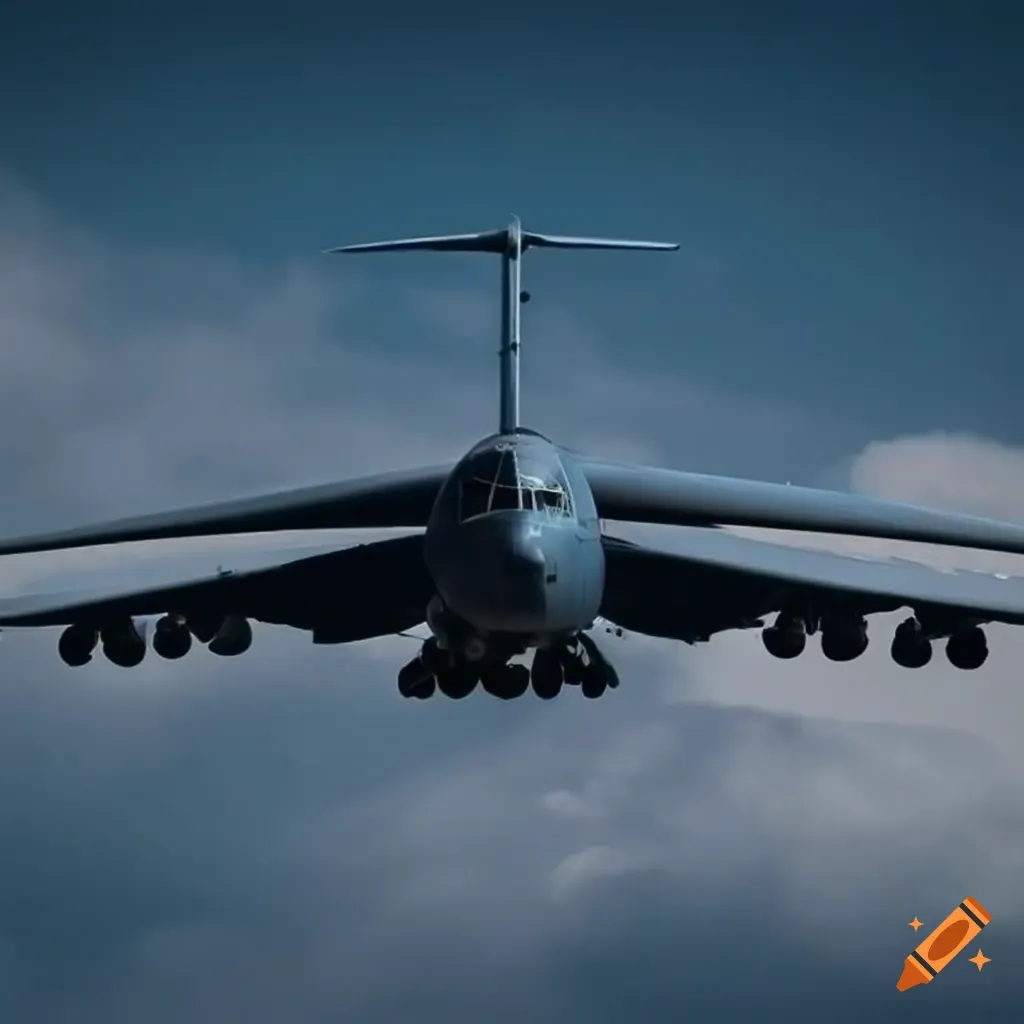 Photo: B-52 Stratofortress, via pics.craiyon.com
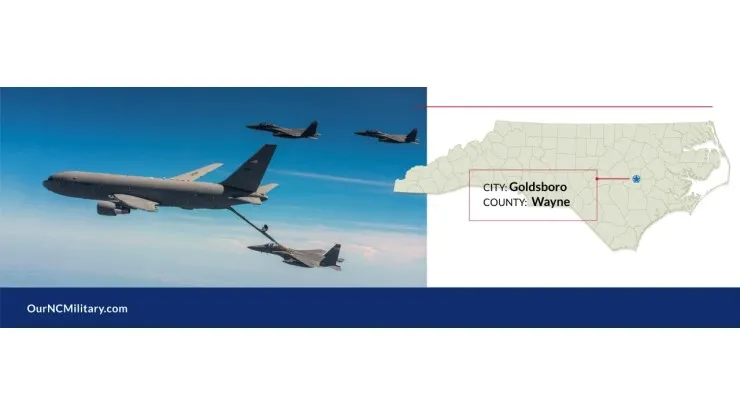 Photo: Seymour Johnson Air Force Base, via files.nc.gov
For eight hours, everything went according to plan. Then, somewhere over North Carolina, everything went catastrophically wrong.
The Leak That Doomed a Bomber
The trouble started with something almost mundane: a fuel leak. The B-52's right wing began hemorrhaging jet fuel at an alarming rate, creating a crisis that would test every safety system the military had designed to prevent nuclear accidents on American soil.
Major Walter Scott Tulloch, the aircraft commander, faced an impossible choice. The bomber was losing fuel too quickly to reach its scheduled refueling point, but it was also too heavy to land safely with two nuclear weapons aboard. Military protocol required him to jettison the bombs over the ocean, but the nearest safe water was hundreds of miles away — farther than his remaining fuel would take him.
At 12:30 AM, with fuel running critically low and the aircraft becoming increasingly unstable, Tulloch made the decision that would haunt military planners for decades: he ordered his crew to bail out over rural North Carolina, leaving the bomber and its nuclear payload to crash wherever gravity took them.
When Nuclear Weapons Become Unguided Missiles
As the B-52 broke apart in the night sky, both Mark 39 bombs separated from the aircraft and began their own terrifying journey toward the earth. These weren't simple atomic bombs — each weapon carried a thermonuclear warhead capable of creating a fireball several miles wide and radiation that would contaminate thousands of square miles.
The first bomb's parachute deployed properly, and it drifted down into a field near the small farming community of Faro. The second bomb's parachute failed, and it slammed into a muddy field at nearly 200 miles per hour, burying itself so deep that recovery crews never found all the pieces.
What happened next would remain classified for over 50 years, hidden in military files marked "Top Secret" and "Restricted Data." When the details finally emerged through Freedom of Information Act requests in 2013, they revealed just how close North Carolina came to becoming an uninhabitable radioactive wasteland.
The Safety Switch That Saved the Eastern Seaboard
According to declassified reports, both bombs went through most of their arming sequence during the fall. The weapons were designed with multiple safety mechanisms to prevent accidental detonation, but the trauma of the aircraft breakup triggered several of these systems in sequence.
The first bomb, which landed relatively gently under its parachute, activated five of its six safety mechanisms. Only a single low-voltage switch prevented it from detonating with the force of 4 megatons — roughly 250 times the power of the Hiroshima bomb. Military investigators later determined that this switch came "very close" to closing during the weapon's violent separation from the aircraft.
The second bomb, which crashed at high speed, was actually in worse condition than initially reported. Declassified documents reveal that investigators found the weapon's arming mechanism had been activated by the impact, and several safety systems had failed. Only the fact that a crucial electrical connection was severed during the crash prevented detonation.
The Cover-Up That Lasted Half a Century
In the immediate aftermath, military officials assured the public that there had been no danger of nuclear explosion. Local newspapers reported a "routine aircraft accident" with no mention of the weapons aboard. The Air Force classified the incident under the code name "Broken Arrow" — military terminology for nuclear weapons accidents — and buried the details in classified files.
For decades, official statements maintained that the weapons were never close to detonating. The military's public position was that multiple independent safety systems had functioned perfectly, making accidental explosion impossible. This narrative persisted through the Cold War and beyond, even as internal documents told a very different story.
The truth only began to emerge in the 1980s, when nuclear safety advocates began filing Freedom of Information Act requests. Even then, heavily redacted documents revealed only hints of how close the accident had come to catastrophe.
What We Know Now
The complete picture didn't emerge until 2013, when investigative journalist Eric Schlosser obtained previously classified documents detailing the accident. These files revealed that senior military officials had been privately terrified by how close the weapons came to detonating.
A 1969 Pentagon study concluded that the accident "could have resulted in a nuclear explosion" and recommended major changes to weapon safety systems. Internal memos described the incident as a "near miss" that highlighted dangerous flaws in nuclear weapons design.
Most shocking was the discovery that similar accidents had occurred multiple times during the Cold War. Between 1950 and 1980, the military recorded over 30 "Broken Arrow" incidents involving nuclear weapons, many of which came dangerously close to accidental detonation on American soil.
The Crater That's Still There
Today, visitors to Goldsboro can still see evidence of the accident. The first bomb left a crater in a farmer's field that remains visible decades later. The second bomb created an even larger impact site, and despite extensive excavation efforts, parts of the weapon remain buried in the North Carolina soil.
The accident site is marked only by historical plaques that mention the aircraft crash but say nothing about nuclear weapons. Local residents often discover fragments of the bomber while farming, and the area remains a popular destination for military history enthusiasts who know the full story.
Lessons from the Day That Almost Was
The Goldsboro incident forced the military to completely redesign nuclear weapon safety systems and abandon the practice of carrying armed nuclear weapons on routine patrol flights. But perhaps more importantly, it revealed how thin the margin of safety really was during the Cold War's most dangerous years.
"We came a lot closer to nuclear war than most people realize," explains Dr. Patricia Lewis, a nuclear safety expert at the Carnegie Endowment for International Peace. "The Goldsboro accident shows that sometimes survival isn't about good planning or smart leadership — sometimes it's just about getting lucky with a single switch."
The residents of Goldsboro went to bed on January 23, 1961, as ordinary citizens of a small North Carolina farming community. They woke up the next morning as survivors of one of the closest calls with nuclear catastrophe in American history — they just didn't know it yet.