One Hundred and Forty-Five Years Late: The Library Book That Quietly Broke Every Record
The Return Nobody Expected
Walk into any public library in America and you'll find a little sign near the circulation desk. It tells you the fine for overdue books — usually something modest, like ten or twenty-five cents per day. Annoying, sure. But manageable.
Now imagine that fine running for a hundred and forty-five years.
That's essentially what happened when a volume borrowed from a New Hampshire lending library sometime in the mid-1800s quietly resurfaced generations later, returned by a descendant of the original borrower who had apparently stumbled across it while cleaning out an estate. The book hadn't been lost, exactly. It had just been... somewhere else. For a very, very long time.
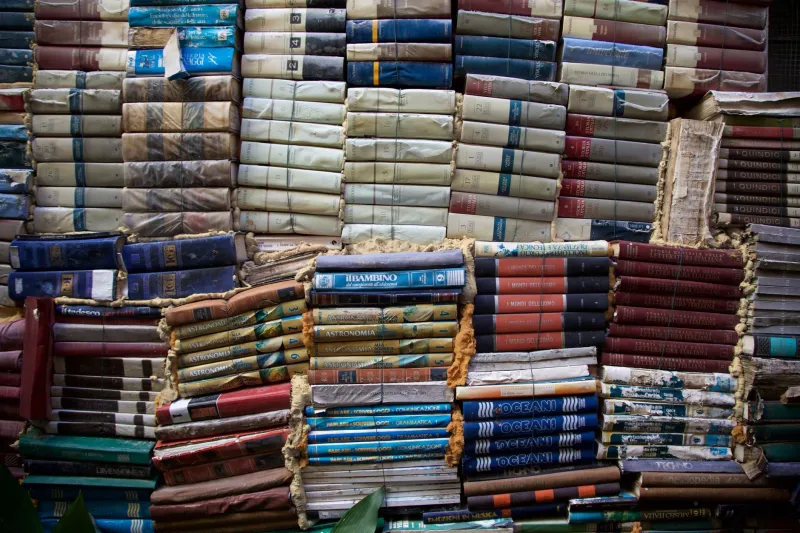
 Photo: New Hampshire, via cdn.britannica.com
The story sounds like a punchline. It was also completely real — and it opened up a genuinely strange chapter in American library history that almost nobody talks about.
How Libraries Actually Worked Back Then
To understand why this happened, you have to understand what lending libraries looked like in the nineteenth century. Public libraries as we know them — free, government-funded, open to everyone — didn't really exist in most of the country until after the Civil War. Before that, many communities relied on what were called subscription libraries or social libraries: private organizations where members paid annual dues in exchange for borrowing privileges.
These institutions were beloved. They were also, by modern standards, spectacularly disorganized.
Record-keeping was done by hand, usually in ledger books maintained by volunteer librarians who had other jobs and other priorities. When a member borrowed a volume, a notation was made. When the volume came back, ideally another notation was made. But institutions changed hands, ledgers got lost, members moved away, and nobody had the infrastructure — or frankly the inclination — to chase down every missing title.
Books disappeared all the time. Most were simply written off.
Some, apparently, were not.
The Fine Nobody Could Actually Calculate
Here's where things get genuinely weird. When long-overdue books have been returned to American libraries over the decades — and this has happened more than you'd think — the institutions receiving them have faced an immediate and surprisingly contentious question: what, if anything, does the borrower's family actually owe?
In the New Hampshire case and others like it, library boards convened, committees were formed, and earnest arguments broke out among people who had clearly never expected to spend their Tuesday evenings debating nineteenth-century lending contracts.
The math alone was enough to cause headaches. A standard overdue fine applied daily over 145 years produces a number that becomes almost philosophical in its absurdity. At even one cent per day — a rate that would have been generous in 1870 — you're looking at somewhere north of five hundred dollars. At modern rates, the figure climbs into the thousands. At some institutions, library boards reportedly sat down with calculators, ran the numbers, stared at the results, and then quietly decided the calculators must be wrong.
Beyond the arithmetic, there was the thornier question of legal standing. Could a library — especially one that had reorganized, merged with a municipal system, or changed its charter — even enforce a lending agreement from a predecessor institution that no longer technically existed? Lawyers who got pulled into these conversations tended to give the same answer: probably not, but also nobody really wanted to find out.
A Surprisingly Common American Tradition
What makes the New Hampshire book remarkable isn't that it happened. It's that it kept happening, in different forms, all across the country.
In Ohio, a book returned to a Cincinnati library in the 1950s had been checked out before the institution had electricity. In Massachusetts, a volume borrowed from a Boston-area athenæum turned up in a garage sale, was purchased by someone who recognized the library's stamp, and was quietly dropped off at the front desk with a note that simply read: "Found this. Sorry."
The Westchester Library System in New York reportedly received a book in the 1980s that had been borrowed in 1910. The borrower's granddaughter brought it in, explained the situation, and was met with a silence so long she reportedly asked if she was in trouble.
She was not in trouble. Libraries, it turns out, are remarkably forgiving institutions when the alternative is explaining a 70-year fine to a retiree who just wanted to do the right thing.
What Actually Happens When You Return a Century-Old Book
The honest answer is: usually not much, and that's by design.
Most American libraries have formal amnesty programs now, precisely because these situations kept arising. The logic is straightforward: the goal of a library is to circulate books, not to bankrupt the descendants of people who got distracted in 1887. When a long-lost volume comes home, the institution typically waives whatever theoretical fine exists, catalogs the book, and — if it's in decent shape — puts it back into circulation.
Occasionally the returned volume is itself historically significant enough to warrant display. A book that has been quietly sitting in a farmhouse attic for a century and a half carries its own kind of provenance.
The New Hampshire book, by most accounts, was in reasonable condition. Old, obviously. A little worn. But intact.
Which raises the genuinely lovely possibility that somewhere in New England right now, that same volume is sitting on a library shelf, available for checkout, with a due date stamped inside the front cover and absolutely no indication of the extraordinary detour it took to get there.
The Moral of the Story
If there's a lesson buried in all of this, it might be less about overdue fines and more about the strange persistence of objects. Books outlast their borrowers. Libraries outlast their original charters. And sometimes a piece of paper tucked inside a volume — a lending slip, a handwritten name, a date from another century — is enough to connect a family in the present to a moment they never witnessed.
That's not a bureaucratic problem. That's just time being weird.
And if you happen to have a library book at home that you borrowed sometime before the moon landing, most institutions would genuinely just like it back. No questions asked.