The Town That Renamed Itself a Swear Word — and the Government Did Absolutely Nothing
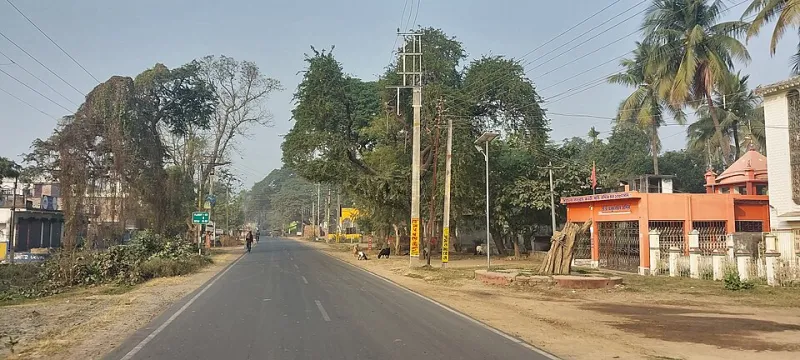
Photo: Pinakpani, CC BY 4.0, via Wikimedia Commons
At some point in every long, grinding argument with a bureaucracy that isn't listening, a person reaches a threshold. The letters go unanswered. The requests get routed to the wrong office. The funding never arrives. The potholes stay. And eventually, the reasonable options run out and the unreasonable ones start looking pretty appealing.
Most people stop well short of the truly unreasonable. Most towns do too.
This one didn't.
A Community at the End of Its Rope
The town in question was small — the kind of small that means your problems don't register on anyone's radar unless you make them impossible to ignore. For years, residents had been pushing federal and state agencies for basic infrastructure attention: road maintenance, utility support, the kind of municipal acknowledgment that larger communities take for granted. For years, the response ranged from polite deflection to complete silence.
So at a local government meeting that probably started like any other local government meeting — folding chairs, bad coffee, a leaky ceiling nobody had fixed yet — someone proposed the nuclear option.
Rename the town. Not to something inspiring or ironic or cleverly symbolic. Rename it to something that would force every official letter, every government form, every road sign in the county to print an expletive in plain English.
The vote passed.
The Mechanics of Naming a Town Something Unprintable
Here's the thing about municipal renaming in the United States: it's surprisingly straightforward. Local governments have broad authority over their own official designations. There's no federal agency that pre-approves town names for content. There's no obscenity filter baked into the municipal incorporation process. As long as the local governing body follows its own procedural rules — proper notice, a valid vote, appropriate documentation — the name change goes through.
The assumption, historically, has always been that no community would actually choose something offensive. The guardrails were never built because nobody thought they'd be needed.
They were needed.
Once the vote was certified, the new name became the official designation. It appeared on correspondence sent to state agencies. It showed up in county records. Local officials had to type it into forms. At least one road sign, by multiple accounts, was updated to reflect it — and stood there for a while, doing exactly what the town intended: making everyone deeply uncomfortable.
Washington's Response: A Loud, Sustained Silence
The town had gambled that the federal government would intervene swiftly, issue some kind of directive, and force a reversal — generating exactly the kind of attention and embarrassment that might finally shake loose some infrastructure funding or at least an acknowledgment that the community existed.
Instead, the federal government did what it does best when faced with something weird and legally ambiguous: it waited.
There was no clear statute that prohibited a town from naming itself an obscenity. First Amendment considerations hovered awkwardly over the whole situation. State agencies, unsure of their authority, forwarded the correspondence and tried not to think too hard about what they were stamping. Legal opinions were quietly sought. Nobody wanted to be the official who overreacted to a swear word on a road sign and ended up in a constitutional tangle over municipal naming rights.
So the name stood. For a legally certified period — not days, but long enough to matter — the offensive designation was real, official, and documented.
The Quiet Reversal Nobody Wanted to Explain
Eventually, the town changed its name back. Or changed it to something else — accounts vary slightly on the specifics, which is itself telling. There was no press conference. No triumphant announcement. No official acknowledgment that things had gone further than intended.
The reversal happened the same way the original vote had happened: at a local government meeting, with a quiet procedural motion, and then it was done. The paperwork was updated. The sign came down. The whole episode was filed away under the category of things everyone involved would prefer not to discuss at length.
The federal attention the town had been seeking? It arrived — eventually, partially, in the grudging way that federal attention usually arrives when a community has made itself impossible to ignore. Whether the stunt actually accelerated anything is genuinely unclear. Government agencies are not known for rewarding obscenity-based advocacy.
The Legal Vacuum That Made It Possible
What this episode exposed — and what makes it genuinely worth examining — is a specific, unexamined gap in American governance. The systems that manage municipal identity assume good faith. They're not built to handle communities that weaponize their own official designations as protest tools.
There is still, as of this writing, no federal statute that explicitly prohibits a town from naming itself something obscene. The legal vacuum the town stumbled into hasn't been formally closed. It's just been left there, on the assumption that no one will need it again.
That assumption has been wrong before.