The Word That Never Existed: How One Printer's Typo Fooled Linguists for Over a Hundred Years
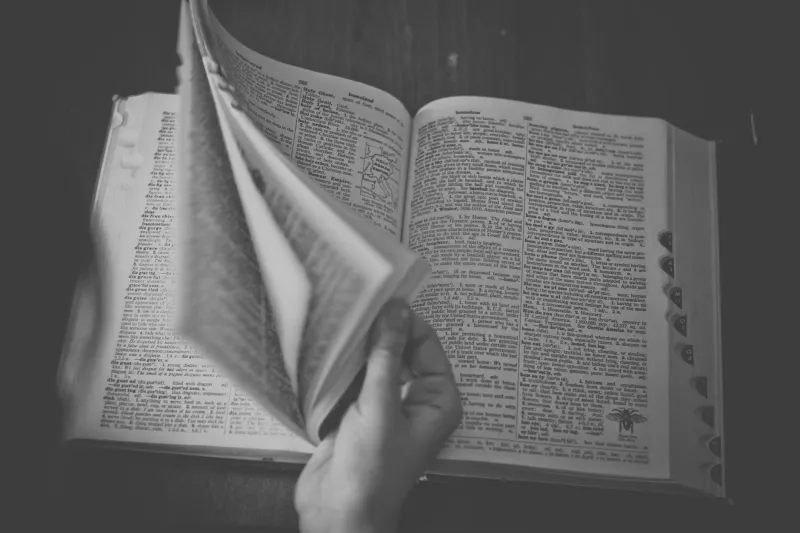
Language is supposed to be one of those things humans have mostly figured out. We have dictionaries, style guides, grammar rules, and entire university departments dedicated to the study of words. So it's a little embarrassing — or maybe just hilarious, depending on your perspective — that for more than a century, English-language dictionaries included a word that was never a word, defined a term that meant nothing, and repeated the whole charade across edition after edition without anyone catching on.
The word was "dord." It was completely fake. And its story is one of the strangest little footnotes in the history of the English language.
How a Word Gets Born (The Wrong Way)
The year was 1931. The G. and C. Merriam Company — the publishers behind the Merriam-Webster dictionary, one of the most authoritative references in American English — was in the middle of compiling a new edition of their dictionary. The editorial process involved thousands of index cards, each containing a word, its definition, its etymology, and instructions for the typesetters who would lay out the final pages.
One of those cards read: D or d
The intended meaning was a usage note indicating that the abbreviation for "density" in scientific writing could be rendered as either a capital D or a lowercase d. It was a mundane little entry about abbreviation conventions — the kind of thing that appears in reference sections and that almost nobody reads.
Somewhere between the editor's desk and the typesetter's hands, the spaces disappeared.
D or d became Dord.
And just like that, a word was born.
A Definition for Something That Meant Nothing
The typesetter, seeing what appeared to be a legitimate entry, did what typesetters do — they set it in type. The editors who reviewed the galleys, skimming through thousands of entries, didn't catch it. The proofreaders didn't catch it. The senior editorial staff didn't catch it. The 1934 edition of the Webster's New International Dictionary, Second Edition went to print with "dord" listed as a noun meaning "density," applicable in both physics and chemistry.
It sat there, quietly and confidently, for five years before anyone noticed.
In 1939, an editor named Austin M. Patterson was reviewing the dictionary's etymology section and noticed something peculiar about the entry for "dord." It had no etymology. Every legitimate word has a history — Latin roots, Old English origins, borrowed French terms, something. "Dord" had nothing. Patterson pulled the original index card and traced the error back to its source.
The entry was removed from subsequent printings. A correction was quietly issued. And then, in the tradition of institutions that have just embarrassed themselves, Merriam-Webster didn't exactly shout the mistake from the rooftops.
Why "Ghost Words" Are More Common Than You'd Think
Linguists have a term for fabricated or erroneous dictionary entries: ghost words. They're phantom entries that exist in print but have no real-world usage — words nobody ever said, nobody ever wrote, nobody ever needed. They appear through typographical errors, misreadings of handwritten manuscripts, and the copy-paste nature of lexicographic tradition, where later dictionaries frequently borrow entries from earlier ones without independently verifying them.
"Dord" is the most famous example, but it's not the only one. The word "phantomnation" appeared in an early American dictionary as a single entry after an editor misread "phantom nation" as one word in a poem. "Morse" was once listed as a noun meaning a clasp or brooch — a legitimate Old English term that had been dead for centuries but kept getting copied from dictionary to dictionary out of sheer editorial momentum.
The problem is structural. Dictionaries are enormous, and the teams that compile them are working from thousands of sources simultaneously. An error that makes it into print once has a strong chance of surviving because subsequent editors, seeing the entry in a published reference, assume someone before them verified it. It's the academic equivalent of a game of telephone, except the message being passed is a definition, and the stakes are the integrity of the English language.
The Uncomfortable Question
Here's the part of the story that should make everyone slightly uncomfortable: if Merriam-Webster — the gold standard of American English, a reference trusted by courts, publishers, and academics — could carry a fake word for five years without noticing, what else might be lurking in our authoritative references?
The answer, according to linguists, is: probably not much anymore, but historically, quite a bit. The Oxford English Dictionary has its own documented history of ghost words. Early editions of Encyclopædia Britannica contained errors that were copied faithfully into subsequent editions for generations. The very act of treating a printed reference as authoritative creates a feedback loop where errors gain legitimacy simply by surviving long enough.
"Dord" survived because it looked like a word. It had the right number of letters, a plausible sound, and a definition that made contextual sense. Nobody questioned it because nobody had a reason to — it was in the dictionary, after all.
The Legacy of a Word That Wasn't
Today, "dord" has a minor cult following among word nerds and linguistics enthusiasts. It gets name-checked in books about the history of lexicography, appears in articles about editorial errors, and occasionally shows up in trivia nights where the question is something like: "What word appeared in the Merriam-Webster dictionary for five years despite never being a real word?"
Some people have even argued, somewhat tongue-in-cheek, that "dord" has now earned its place in the language through sheer notoriety. It's been written about, discussed, and referenced more than most legitimate words that appear in the same dictionary.
Austin Patterson, the editor who caught the error, reportedly described the discovery with the kind of dry understatement that only someone who has spent decades reading dictionary entries could muster. He noted that the word had "no business" being there and left it at that.
Somewhere, a typesetter who dropped a space in 1931 accidentally created a word that linguists are still talking about nearly a century later. That's either a cautionary tale about editorial rigor or the most accidental act of creative writing in American history.
Probably both.