Mold, Mess, and a Miracle: The Accidental Discovery That Changed Medicine Forever
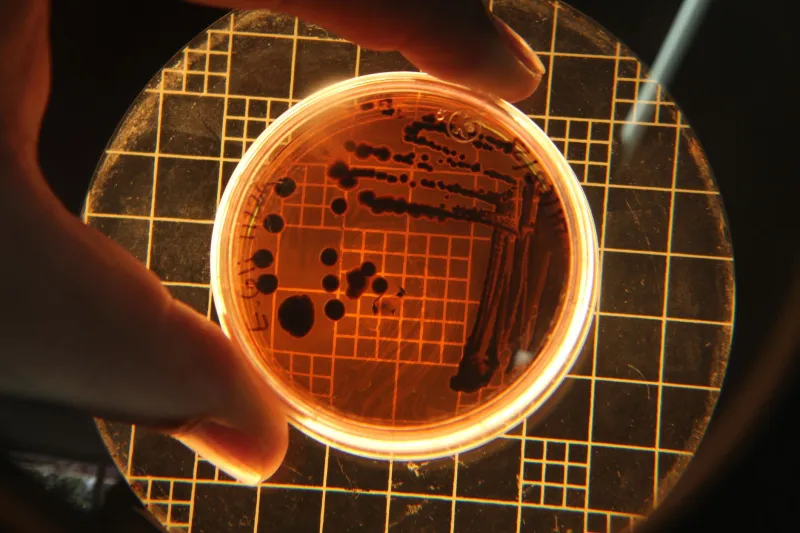
If your boss ever criticized your messy desk, here's a story to print out and tape to your monitor. In 1928, a Scottish bacteriologist working out of a cluttered London lab walked away from a pile of dirty petri dishes before a summer vacation — and came back to find something growing in the mess that would eventually become the most important drug in human history.
The man was Alexander Fleming. The mess was penicillin. And the whole thing was, by every reasonable measure, a complete accident.
A Lab That Would Have Failed Any Health Inspection
Fleming worked at St. Mary's Hospital in London, and his colleagues had a running joke about his workspace. The man was brilliant but deeply disorganized. His bench was perpetually cluttered with bacterial cultures, half-finished experiments, and stacks of notes that seemed to multiply on their own. Where other researchers were meticulous about sterile conditions and controlled environments, Fleming operated in what one biographer later described as organized chaos.
In the summer of 1928, Fleming was studying Staphylococcus bacteria — the kind responsible for skin infections, pneumonia, and a whole catalog of misery. Before heading off on holiday, he stacked his petri dishes in a corner of the lab rather than properly disposing of them. It was sloppy. It was against protocol. And it turned out to be the most consequential act of laziness in the history of science.
When he returned in early September, he started sorting through the pile. Most of the dishes were ruined by contamination — exactly what you'd expect when bacterial cultures sit around uncovered in a London lab for weeks. He was about to toss them all when something stopped him.
One of the dishes had a strange mold growing on it. That wasn't unusual. What was unusual was the ring of nothing surrounding it — a clear, bacteria-free zone radiating outward from the mold like a tiny invisible force field. Whatever that mold was, it was killing the bacteria around it.
Fleming reportedly stared at it for a long moment and then said, in what might be the most understated scientific observation ever recorded: "That's funny."
The Mold That Murdered Bacteria
The contaminating mold turned out to be Penicillium notatum, a common airborne fungus. Fleming tested it further and confirmed what the petri dish had suggested — the mold produced something that actively destroyed bacteria. He called the active substance penicillin.
He published his findings in 1929. And then, almost unbelievably, not much happened.
Fleming himself couldn't figure out how to isolate or stabilize the active compound in any useful quantity. Penicillin degraded quickly, was difficult to purify, and Fleming — a bacteriologist, not a chemist — didn't have the tools or the team to push it further. His paper landed with a quiet thud in the scientific community. He moved on to other work. Penicillin sat on the shelf, technically discovered but practically useless, for over a decade.
The story could have ended there. It almost did.
The Second Accident: A World War Saves the Discovery
What resurrected penicillin wasn't scientific curiosity — it was World War II.
In 1939, a team at Oxford University led by Howard Florey and Ernst Boris Chain began systematically revisiting old, overlooked research on antibacterial substances. They stumbled on Fleming's 1929 paper and decided to take another crack at the stabilization problem. By 1941, they had produced enough purified penicillin to conduct the first human trial.
The patient was a British police officer named Albert Alexander who was dying from a severe bacterial infection after scratching his face on a rosebush. Within 24 hours of receiving penicillin, he began to recover. It was nothing short of miraculous. Then the supply ran out — they were literally filtering the drug from the patient's urine to reuse it — and Alexander eventually died. But the proof of concept was undeniable.
The problem now was scale. Britain, under active German bombardment, couldn't manufacture penicillin in the quantities needed. Florey flew to the United States, convinced American pharmaceutical companies to get involved, and by 1944, the US was producing enough penicillin to treat every Allied soldier wounded on D-Day.
The drug that had sat forgotten for twelve years was suddenly everywhere. Infections that had been death sentences — strep throat, syphilis, gangrene, pneumonia — became treatable. Soldiers who would have died from infected wounds in every previous war survived. The mortality rate from bacterial pneumonia dropped from roughly 30 percent to under 5 percent almost overnight.
What the Numbers Actually Mean
Estimates suggest penicillin and the antibiotics that followed it have saved somewhere between 80 million and 200 million lives since 1940. Some researchers put the number even higher when you account for the downstream effects on public health infrastructure. It is, by almost any measure, the most impactful medical intervention in human history.
Fleming, Florey, and Chain shared the Nobel Prize in Medicine in 1945. Fleming, ever modest, spent the rest of his life pointing out that he hadn't really invented anything — the mold had been doing what mold does for millions of years. He'd just been too lazy to clean up his petri dishes before vacation.
The Strangest Part of the Whole Story
Here's the detail that really makes you stop: nobody has ever definitively explained how the Penicillium spores got into Fleming's lab in the first place. One popular theory involves a mycology lab one floor below that was studying molds at the same time. The spores may have floated upstairs through an open window or a ventilation gap.
So the sequence of events that saved hundreds of millions of lives goes something like this: a messy scientist left dirty dishes out before vacation, an open window let in fungal spores from a downstairs lab, those spores landed on exactly the right dish at exactly the right temperature during an unusual London cold snap that slowed bacterial growth long enough for the mold to establish itself, and the scientist happened to notice the clear ring before throwing the dish away.
Change any single variable in that chain — cleaner lab, closed window, warmer summer, faster cleanup — and penicillin might have been discovered decades later, or by someone else entirely, or possibly not at all.
Science's greatest gift to humanity came from a vacation, a messy desk, and a momentary curiosity about something that looked, as Fleming put it, funny.
That's not a metaphor. That's just what happened.