Shipwrecked Into Citizenship: The Accidental Island Colony That Lawyers Couldn't Touch for a Century
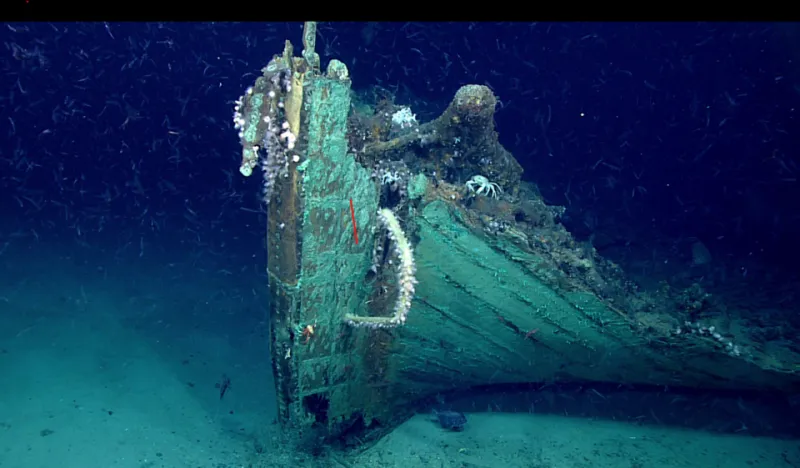
Photo: NOAA Office of Ocean Exploration and Research, Public domain, via Wikimedia Commons
Nobody Planned to Live There
The ship wasn't supposed to stop. It wasn't supposed to sink. And the sandbar it wrecked on wasn't supposed to exist.
In the latter half of the 1800s, a commercial vessel traveling along a coastal route struck a submerged obstruction — likely a shifting sandbank that hadn't appeared on any chart because it had only recently accumulated enough sediment to become a genuine hazard. The ship didn't sink dramatically. It grounded, listed, and broke apart slowly enough that the crew and passengers made it to the sandbar itself. They were alive. They were stranded. And they were standing on a strip of land that, technically speaking, didn't exist on any official map.
Search parties eventually found them. Most survivors left. A handful didn't.
Why Some of Them Stayed
The reasons people choose to remain in impractical places are rarely simple. For the small group that declined rescue, the motivations appear to have been a mix of the practical and the stubborn. Some had salvaged significant cargo from the wreck — goods they couldn't easily transport. Some had begun constructing shelter and decided that a rough hut on a sandbar was preferable to returning to whatever circumstances they'd been fleeing on the mainland. At least one account suggests a dispute over the rescued goods made departure complicated.
Whatever the reason, they stayed. And then they built. And then, slowly, others arrived.
Word spread — as word does — that there was a place where the ordinary rules didn't quite apply. The sandbar sat in ambiguous waters. It hadn't been claimed, surveyed, or formally annexed by any government. It existed in a jurisdictional gap, the kind that 19th-century territorial administration was full of simply because there was more geography than there were administrators to manage it.
The Legal Tangle That Protected Them
Here's where the story gets genuinely strange.
When authorities eventually took notice of the growing settlement and moved to address it, they ran into a wall of conflicting legal frameworks. Maritime salvage law held that the survivors had legitimate claims to the wreck and its contents — and by extension, to the site of the salvage operation. Abandoning the site could mean forfeiting those claims. The settlers argued, with some legal basis, that they were engaged in an ongoing salvage operation and had the right to remain.
Simultaneously, the sandbar's formation — created in part by the wreck itself, which had acted as a collection point for sediment and debris — raised questions about whether it qualified as natural land, artificial land, or something in between. Each classification carried different legal implications for who could claim it and how.
The territorial waters question added another layer. Depending on which measurement standard was applied, the sandbar fell either just inside or just outside the jurisdictional boundary of the nearest recognized authority. Different officials, applying different standards, reached different conclusions. Nobody could agree on whose problem the settlement actually was.
So nobody did anything. For a very long time.
A Community in Legal Limbo
At its peak, the settlement reportedly housed several dozen people. It developed the basic infrastructure of any small community — communal storage, informal governance, shared rules about water and food. Visiting traders recognized it as a waypoint. It appeared, unnamed, on at least one privately produced coastal chart simply because sailors found it useful to know it was there.
The settlers were not invisible. They were just legally unaddressable. Every attempt to formalize removal ran into the same thicket of competing claims, ambiguous jurisdiction, and the practical reality that nobody wanted to spend significant legal resources evicting a few dozen people from a sandbar.
There's a term for places like this in legal scholarship: de facto communities. They exist in practice without existing in law. History is full of them, though most don't last long. This one lasted because the legal ambiguity was genuinely unresolvable with the tools available at the time, and because the settlers were savvy enough — or stubborn enough — to keep raising the same objections every time removal came up.
The End, Eventually
The settlement didn't survive forever. Sandbars are, by nature, impermanent. Gradual erosion and a particularly severe storm season eventually reduced the landmass to a point where habitation became impractical regardless of legal status. The remaining residents left, not because anyone made them, but because there was simply less land to stand on.
The legal questions were never formally resolved. They became moot.
What the settlement left behind was a paper trail — court filings, official correspondence, competing jurisdictional claims — that legal historians occasionally dig up as an example of how ordinary people can accidentally construct an almost impenetrable bureaucratic fortress just by being somewhere inconvenient and knowing a few things about maritime law.
Nobody planned any of it. A ship went the wrong way. Some people decided to stay. And for over a century, the law simply couldn't figure out what to do about that.